

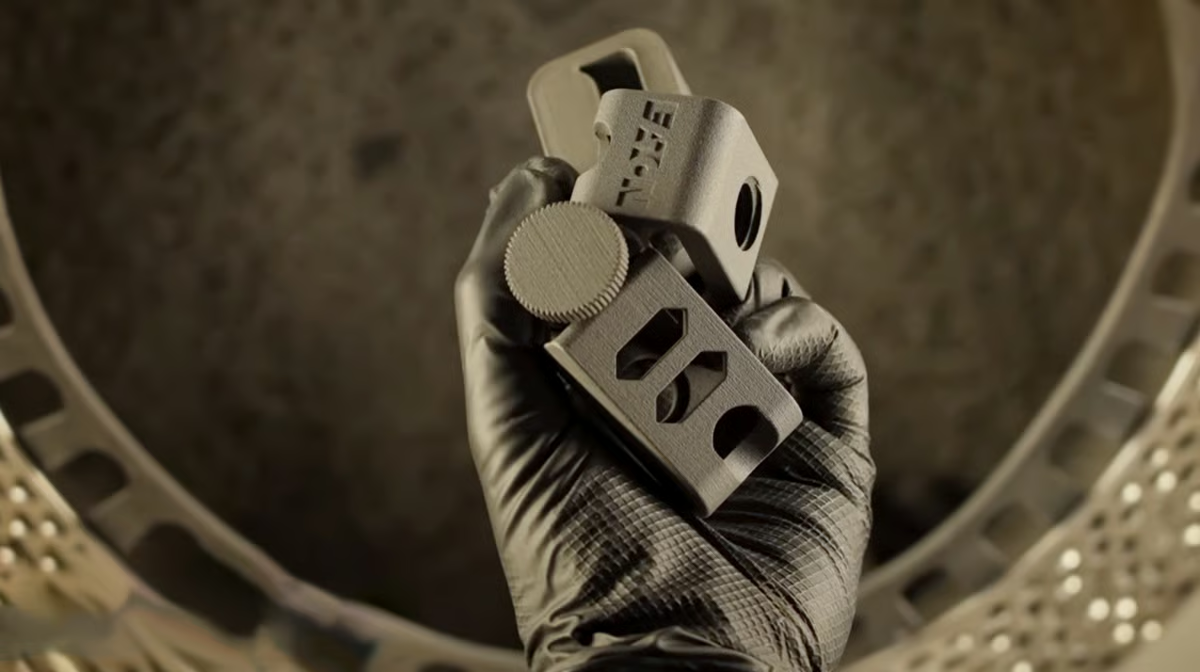
This case study examines how Eaton Corporation, a global power management leader, successfully integrated in-house 3D printing at its Olean, New York, facility to overcome the challenges of traditional manufacturing for tooling. By adopting selective laser sintering (SLS) technology, Eaton replaced 90% of its machined jigs and fixtures, leading to a drastic reduction in production costs, a significant decrease in lead times, and a full return on investment (ROI) within nine months. This initiative highlights the transformative impact of additive manufacturing on operational efficiency and cost-effectiveness in a high-stakes industrial environment.
The Challenge
Eaton’s Olean facility traditionally relied on externally sourced, machined components for its essential tooling, including jigs, fixtures, and parts like grinding V-block holders and electrical tester cups. This conventional approach presented several significant challenges:
- High Costs: The expense of machining custom tools was substantial. A full suite of electrical tester cups, for example, cost approximately $17,400.
- Long Lead Times: Dependence on external vendors resulted in extended lead times for new or replacement tools, causing considerable downtime on the factory floor and disrupting production schedules.
- Lack of Flexibility: The process was rigid, offering little room for rapid prototyping, design iteration, or on-the-fly adjustments, thereby stifling engineering innovation.
- Operational Inefficiency: The combination of cost, waiting periods, and inflexibility created a major bottleneck in the manufacturing workflow, limiting the facility’s overall productivity and self-sufficiency.
The Solution
To address these challenges, Eaton’s management made a strategic decision to invest in in-house additive manufacturing technology. The facility acquired selective laser sintering (SLS) 3D printers from Formlabs. This solution was chosen for its ability to produce robust, durable parts suitable for demanding factory floor applications directly from digital design files. By bringing this capability in-house, Eaton aimed to gain direct control over its tooling production, enabling on-demand manufacturing of custom parts with engineering-grade materials.
Implementation and Outcome
The implementation involved a systematic transition of tooling production from external machining to the new internal SLS printers. Engineers identified and prioritized components that were ideal candidates for 3D printing, focusing on jigs and fixtures. Within a short period, the facility successfully converted approximately 90% of these parts to the new process.
The results were immediate and impactful:
- Dramatic Cost Reduction: The cost of producing a grinding V-block holder plummeted from $45 per machined unit to just $4 per 3D-printed assembly, generating annual savings of around $6,000 on this single component. The high costs associated with parts like the electrical tester cups were similarly slashed.
- Rapid Return on Investment: The substantial savings in cost and the elimination of production downtime enabled the facility to achieve a full return on its investment in the 3D printing technology in just nine months.
- Enhanced Operational Efficiency: With the ability to print tools and fixtures on-demand, lead times were reduced from weeks to hours. This agility eliminated costly downtime and significantly improved the factory’s workflow and self-sufficiency.
- Empowered Innovation: Access to an in-house rapid manufacturing solution empowered Eaton’s engineers to be more creative and efficient. They could now quickly prototype, test, and deploy new tool designs, fostering a culture of continuous improvement.
Conclusion
Eaton’s strategic adoption of in-house SLS 3D printing serves as a compelling model for modernizing industrial manufacturing processes. By replacing its reliance on costly and slow traditional machining, the company not only achieved remarkable cost savings and a swift ROI but also fundamentally enhanced its operational agility and engineering capabilities. This case demonstrates that additive manufacturing is a viable and highly effective solution for overcoming long-standing challenges in tooling and production, delivering tangible financial and competitive advantages.