

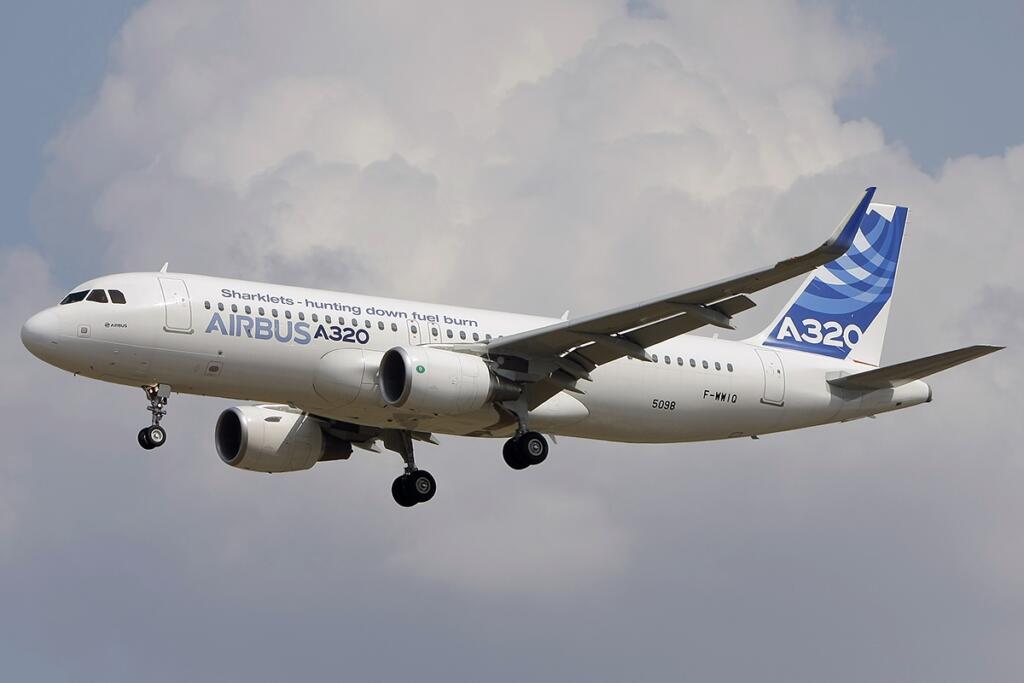
Aerospace giant Airbus has significantly expanded its use of additive manufacturing (AM), confirming it is now 3D printing more than 25,000 flight-ready polymer (plastic) parts per year. This production is part of a larger initiative that has seen over 200,000 certified 3D-printed polymer components integrated across its major aircraft, including the A320 and A350 airliners, and the A400M military transport.
The company utilizes industrial-grade Fused Deposition Modeling (FDM) technology, leveraging Stratasys 3D printers and ULTEM 9085 Certified Grade filament to manufacture these critical parts.
The integration of AM has delivered substantial operational and economic benefits. For the A350 aircraft specifically, Airbus reports lead time savings of 85% and a 43% reduction in part weight, which directly contributes to greater fuel efficiency.
“We can produce certified, repeatable parts faster, with less reliance on complex supply chains,” stated Serge Senac, Airbus Industrial Leader for Polymer Additive Manufacturing. “This manufacturing flexibility reduces costs and ensures improved response times to meet the needs of our customers around the world.”
The technology also enables more agile supply chains by eliminating the Minimum Order Quantity (MOQ) requirement and allowing for the on-demand production of spare parts near the point of need. This flexibility minimizes inventory costs and helps reduce aircraft downtime. Furthermore, Airbus notes that additive technologies are supporting its commitment to sustainability and its roadmap to achieving carbon neutrality by 2050, both through the creation of lightweight parts and the engineering of more efficient systems, such as advanced heat exchangers.