

Close Menu
AM ChronicleAM Chronicle
  • Content
    • News
    • Insights
    • Case Studies
    • AM Infocast
  • Focus Regions
    • India
    • Asia Pacific
    • Middle East
    • North America
    • Europe
  • Industries
    • Automotive
    • Aerospace
    • Defence
    • Energy
    • Construction
    • Healthcare
    • Tooling
    • Engineering
  • Training
  • Magazine
    • Digital Issues
  • Events
Facebook Instagram YouTube LinkedIn
  • About us
  • Media Kit
  • Contact us
Facebook Instagram YouTube LinkedIn
AM ChronicleAM Chronicle
  • Content
    1. News
    2. Insights
    3. Case Studies
    4. AM Infocast
    5. View All
    Bahrain’s First Advanced Additive Manufacturing Hub Launched

    Bahrain Launches First Advanced Additive Manufacturing Hub in Partnership with Roboze

    December 12, 2025
    Airbus Now 3D Printing Over 25,000 Flight-Ready Plastic Parts Annually

    Airbus Now 3D Printing Over 25,000 Flight-Ready Plastic Parts Annually

    December 12, 2025
    Caracol and RusselSmith Sign a Strategic Partnership to Drive Advanced Manufacturing in West Africa

    Caracol and RusselSmith Sign a Strategic Partnership to Drive Advanced Manufacturing in West Africa

    October 3, 2025
    NAMI and Lockheed Martin Collaborate for Additive Manufacturing Conversion Project

    NAMI and Lockheed Martin Collaborate for Additive Manufacturing Conversion Project 

    September 16, 2025
    Making Milestones: 3D printing for a greener tomorrow

    Making Milestones: 3D printing for a greener tomorrow

    August 29, 2025
    Nestlé embraces technology and innovation in 3D printing

    Nestlé embraces technology and innovation in 3D printing

    August 29, 2025
    Pure copper and copper alloy (CuCrZr, CuCrNb, CuSn10) samples produced using ADDIREEN's green-laser powder bed fusion AM machines (Image courtesy: Addireen Technologies)

    Addireen: Pioneering Copper Printing in Metal Additive Manufacturing

    August 12, 2025
    Digital Twin Integration in Additive Manufacturing Systems: Revolutionizing Design, Production, and Lifecycle Management

    Digital Twin Integration in Additive Manufacturing Systems: Revolutionizing Design, Production, and Lifecycle Management

    July 4, 2025
    Source: Formlabs

    Case Study: Eaton Corporation’s Strategic Transition to In-House 3D Printing for Tooling Applications

    August 29, 2025
    Revolutionizing Atherosclerosis Research with 3D-Bioprinted Brain Vessels

    Revolutionizing Atherosclerosis Research with 3D-Bioprinted Brain Vessels

    August 25, 2025
    Formlabs fuse 1+

    How Imaginarium Helped Kaash Studio Scale with the Right 3D Printing Technology

    April 12, 2025
    The Formlabs Fuse 1+ 30W

    Kaash Studio Optimized Service Bureau Operations with Formlabs 3D Printers- Case Study

    January 30, 2025
    Sustainable Production of Metal Powder for Additive Manufacturing

    Sustainable Production of Metal Powder for Additive Manufacturing with Bruce Bradshaw

    February 15, 2024
    Meeting Evolving Customer Demands in the Additive Manufacturing Industry with Tyler Reid

    Meeting Evolving Customer Demands in the Additive Manufacturing Industry with Tyler Reid

    February 9, 2024
    Innovation is at the heart of AMUG with Diana Kalisz

    Innovation is at the heart of AMUG with Diana Kalisz

    March 7, 2023
    3D Printing Workshops at AMUG with Edward Graham

    3D Printing Workshops at AMUG with Edward Graham

    March 7, 2023
    Bahrain’s First Advanced Additive Manufacturing Hub Launched

    Bahrain Launches First Advanced Additive Manufacturing Hub in Partnership with Roboze

    December 12, 2025
    Airbus Now 3D Printing Over 25,000 Flight-Ready Plastic Parts Annually

    Airbus Now 3D Printing Over 25,000 Flight-Ready Plastic Parts Annually

    December 12, 2025
    Ms. Larissa Smith, Director, Advanced Manufacturing, DRPM, Maritime Industrial Base Program, U.S. Navy, and Mr. Ken Jeanos, VP, Materials and Supply Chain, General Dynamics Electric Boat, are joined by Lincoln Electric leadership and its Additive Solutions team to commemorate the ribbon cutting that marks the investment of four SculptPrint™ 1500 additive manufacturing cells to support the production of critical submarine components.

    U.S. Navy’s Maritime Industrial Base Program, General Dynamics Electric Boat, and Lincoln Electric Advance Additive Manufacturing to Strengthen Submarine Production

    October 3, 2025
    Caracol and RusselSmith Sign a Strategic Partnership to Drive Advanced Manufacturing in West Africa

    Caracol and RusselSmith Sign a Strategic Partnership to Drive Advanced Manufacturing in West Africa

    October 3, 2025
  • Focus Regions
    • India
    • Asia Pacific
    • Middle East
    • North America
    • Europe
  • Industries
    • Automotive
    • Aerospace
    • Defence
    • Energy
    • Construction
    • Healthcare
    • Tooling
    • Engineering
  • Training
  • Magazine
    • Digital Issues
  • Events
Subscribe
AM ChronicleAM Chronicle
Home » Press Release

MIT Researchers 3D print sensors for satellites

Press Release By AM Chronicle EditorJuly 31, 20226 Mins Read
MIT CubeSat Sensor 01 press 0
LinkedIn Twitter Facebook WhatsApp Pinterest Email Copy Link

Cheap and quick to produce, these digitally manufactured  plasma 3D printed sensors could help scientists predict the weather or study climate change.

More from the News 

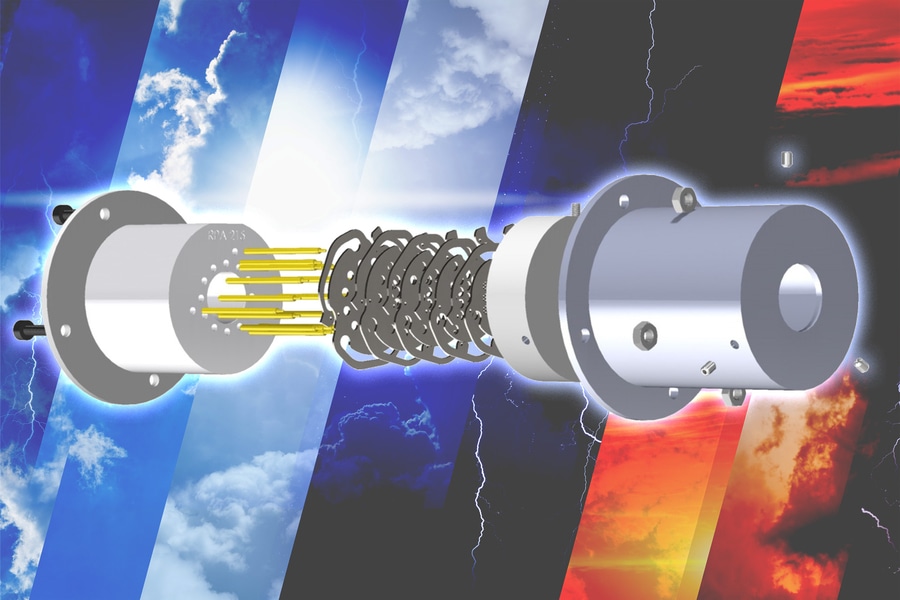
MIT scientists have created the first completely digitally manufactured plasma sensors for orbiting spacecraft. These plasma sensors, also known as retarding potential analyzers (RPAs), are used by satellites to determine the chemical composition and ion energy distribution of the atmosphere.

The 3D-printed and laser-cut hardware performed as well as state-of-the-art semiconductor plasma sensors that are manufactured in a cleanroom, which makes them expensive and requires weeks of intricate fabrication. By contrast, the 3D-printed sensors can be produced for tens of dollars in a matter of days.

Due to their low cost and speedy production, the sensors are ideal for CubeSats. These inexpensive, low-power, and lightweight satellites are often used for communication and environmental monitoring in Earth’s upper atmosphere.

The researchers developed RPAs using a glass-ceramic material that is more durable than traditional sensor materials like silicon and thin-film coatings. By using the glass-ceramic in a fabrication process that was developed for 3D printing with plastics, there were able to create sensors with complex shapes that can withstand the wide temperature swings a spacecraft would encounter in lower Earth orbit.

“Additive manufacturing can make a big difference in the future of space hardware. Some people think that when you 3D-print something, you have to concede less performance. But we’ve shown that is not always the case. Sometimes there is nothing to trade off,” says Luis Fernando Velásquez-García, a principal scientist in MIT’s Microsystems Technology Laboratories (MTL) and senior author of a paper presenting the plasma sensors.

Joining Velásquez-García on the paper are lead author and MTL postdoc Javier Izquierdo-Reyes; graduate student Zoey Bigelow; and postdoc Nicholas K. Lubinsky. The research is published in Additive Manufacturing.

Versatile sensors

An RPA was first used in a space mission in 1959. The sensors detect the energy in ions, or charged particles, that are floating in plasma, which is a superheated mix of molecules present in the Earth’s upper atmosphere. Aboard an orbiting spacecraft like a CubeSat, the versatile instruments measure energy and conduct chemical analyses that can help scientists predict the weather or monitor climate change.

The sensors contain a series of electrically charged meshes dotted with tiny holes. As plasma passes through the holes, electrons and other particles are stripped away until only ions remain. These ions create an electric current that the sensor measures and analyzes.

Key to the success of an RPA is the housing structure that aligns the meshes. It must be electrically insulating while also able to withstand sudden, drastic swings in temperature. The researchers used a printable, glass-ceramic material that displays these properties, known as Vitrolite.

Pioneered in the early 20th century, Vitrolite was often used in colorful tiles that became a common sight in art deco buildings.

The durable material can also withstand temperatures as high as 800 degrees Celsius without breaking down, whereas polymers used in semiconductor RPAs start to melt at 400 degrees Celsius.

“When you make this sensor in the cleanroom, you don’t have the same degree of freedom to define materials and structures and how they interact together. What made this possible is the latest developments in additive manufacturing,” Velásquez-García says.

Rethinking fabrication

The 3D printing process for ceramics typically involves ceramic powder that is hit with a laser to fuse it into shapes, but this process often leaves the material coarse and creates weak points due to the high heat from the lasers.

Instead, the MIT researchers used vat polymerization, a process introduced decades ago for additive manufacturing with polymers or resins. With vat polymerization, a 3D structure is built one layer at a time by submerging it repeatedly into a vat of liquid material, in this case Vitrolite. Ultraviolet light is used to cure the material after each layer is added, and then the platform is submerged in the vat again. Each layer is only 100 microns thick (roughly the diameter of a human hair), enabling the creation of smooth, pore-free, complex ceramic shapes.

In digital manufacturing, objects described in a design file can be very intricate. This precision allowed the researchers to create laser-cut meshes with unique shapes so the holes lined up perfectly when they were set inside the RPA housing. This enables more ions to pass through, which leads to higher-resolution measurements.

Because the sensors were cheap to produce and could be fabricated so quickly, the team prototyped four unique designs.

While one design was especially effective at capturing and measuring a wide range of plasmas, like those a satellite would encounter in orbit, another was well-suited for sensing extremely dense and cold plasmas, which are typically only measurable using ultraprecise semiconductor devices.

This high precision could enable 3D-printed sensors for applications in fusion energy research or supersonic flight. The rapid prototyping process could even spur more innovation in satellite and spacecraft design, Velásquez-García adds.

“If you want to innovate, you need to be able to fail and afford the risk. Additive manufacturing is a very different way to make space hardware. I can make space hardware and if it fails, it doesn’t matter because I can make a new version very quickly and inexpensively, and really iterate on the design. It is an ideal sandbox for researchers,” he says.

While Velásquez-García is pleased with these sensors, in the future he wants to enhance the fabrication process. Reducing the thickness of layers or pixel size in glass-ceramic vat polymerization could create complex hardware that is even more precise. Moreover, fully additively manufacturing the sensors would make them compatible with in-space manufacturing. He also wants to explore the use of artificial intelligence to optimize sensor design for specific use cases, such as greatly reducing their mass while ensuring they remain structurally sound.

This work was funded, in part, by MIT, the MIT-Tecnológico de Monterrey Nanotechnology Program, the MIT Portugal Program, and the Portuguese Foundation for Science and Technology.

Subscribe to AM Chronicle Newsletter to stay connected:  https://bit.ly/3fBZ1mP 

Follow us on LinkedIn: https://bit.ly/3IjhrFq 

Visit for more interesting content on additive manufacturing: https://amchronicle.com/

Original Source 

3d printing 3D printing research additive manufacturing Electronics MIT research Satellites sensors space
AM Chronicle Editor

NAMIC GLOBAL AM SUMMIT 2025
LATEST FROM AM
Bahrain’s First Advanced Additive Manufacturing Hub Launched Middle East

Bahrain Launches First Advanced Additive Manufacturing Hub in Partnership with Roboze

December 12, 20252 Mins Read
Airbus Now 3D Printing Over 25,000 Flight-Ready Plastic Parts Annually News

Airbus Now 3D Printing Over 25,000 Flight-Ready Plastic Parts Annually

December 12, 20252 Mins Read
Ms. Larissa Smith, Director, Advanced Manufacturing, DRPM, Maritime Industrial Base Program, U.S. Navy, and Mr. Ken Jeanos, VP, Materials and Supply Chain, General Dynamics Electric Boat, are joined by Lincoln Electric leadership and its Additive Solutions team to commemorate the ribbon cutting that marks the investment of four SculptPrint™ 1500 additive manufacturing cells to support the production of critical submarine components. Uncategorized

U.S. Navy’s Maritime Industrial Base Program, General Dynamics Electric Boat, and Lincoln Electric Advance Additive Manufacturing to Strengthen Submarine Production

October 3, 20252 Mins Read

CONNECT WITH US

  • 126 A, Dhuruwadi, A. V. Nagvekar Marg, Prabhadevi, Mumbai 400025
  • [email protected]
  • +91 022 24306319
Facebook Instagram YouTube LinkedIn

Newsletter

Subscribe to the AM Chronicle mailer to receive latest tech updates and insights from global industry experts.

SUBSCRIBE NOW

Quick Links

  • News
  • Insights
  • Case Studies
  • AM Training
  • AM Infocast
  • AM Magazine
  • Events

Media

  • Advertise with us
  • Sponsored Articles
  • Media Kit

Events

CNT Expositions & Services
© 2025 CNT Expositions & Services LLP.
  • Privacy Policy
  • Cookie Policy

Type above and press Enter to search. Press Esc to cancel.


0 / 75