


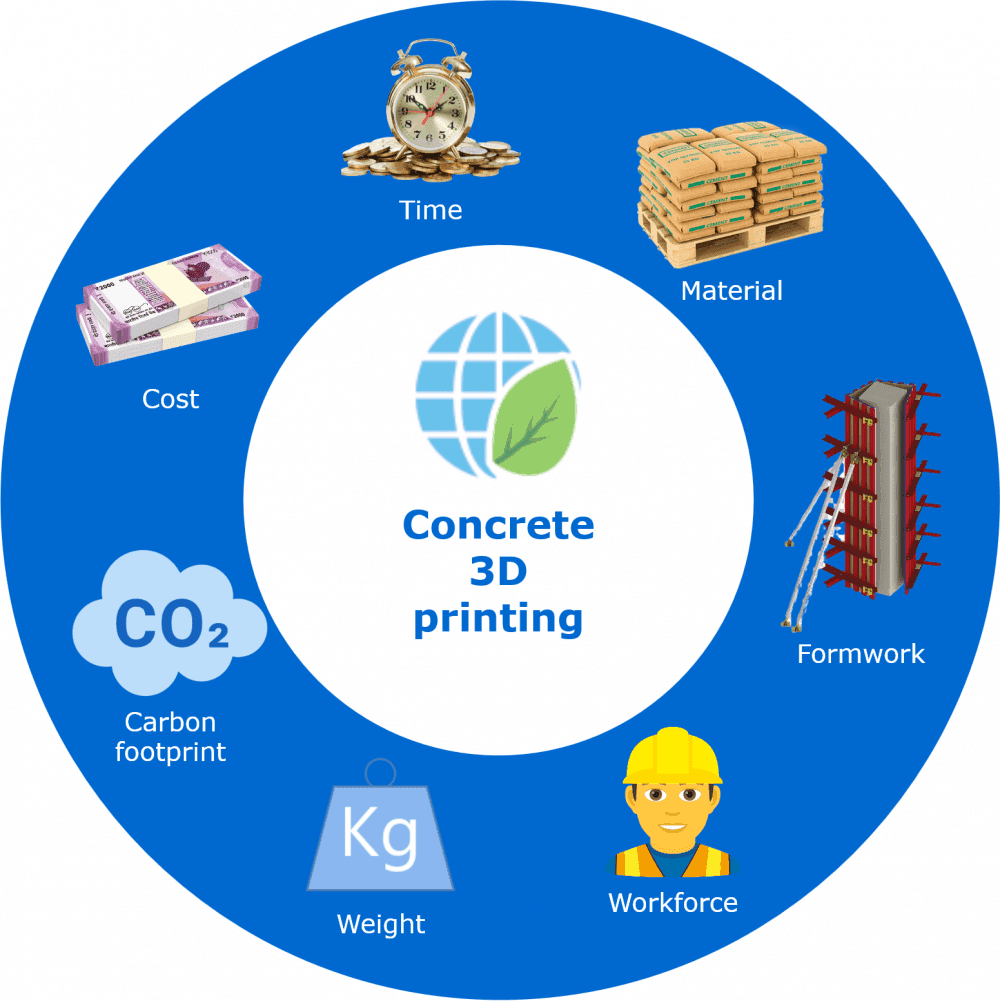
Concrete 3D printing, in recent years, has been increasingly utilized as a digital fabrication technology in the construction industry. The concrete 3D printing technology is a transformative development in the construction industry by enabling the automotive fabrication of lighter, robust, and mass customizable structures. However, the degree of customization in the construction industry, in past decades, is relatively low as compared with other industries including automobiles, consumer electronics, apparel, food, and health care. Therefore, it increases the client’s scarification gap between the desired design and the manufacturable design. Engineers, generally, have limited the bespoke and mass customization to meet the economical aspects and ensure the structural stability of the structures. Thus, the application of concrete 3D printing technology in the construction industry is found to be very promising in recent years by enabling mass customization and production. Moreover, the demand for mass customization in the construction industry might be one of the main reasons for escalating the global requirement for concrete 3D printing. The essential factors for adopting digital fabrication in the construction industry are to reduce the time, cost, materials, formwork, workforce, carbon footprint, and weight of the structure, as shown in Figure 1. As a result, concrete 3D printing is utilized in various countries to fabricate sustainable structures. The adoption of digital fabrication techniques in construction in various regions of the world are discussed below.
Europe
The European countries, including Switzerland, Netherland, Italy, France, Germany, and Austria, have been using digital fabrication techniques to ensure sustainability and eco-friendly construction. Moreover, the European countries proudly hold the five different 3D printed bridges, as shown in Figure 2. For instance, the world’s first concrete 3D printed pedestrian bridge in Spain was built in early 2016. The total length of the pedestrian bridge is 12m and 1.75m wide. This pedestrian bridge was 3D printed using microfiber reinforced concrete. The parametric design ensures the optimal material distribution with the enhancement of structural performance. Moreover, the parametric design and generative design gives organic shapes which challenge the traditional casting method. To overcome the challenges and fabrication constraints, they have adapted digital fabrication techniques.
Subsequently, the cable reinforced and post-tensioned 26 feet bicycle bridge was 3D printed and opened in the Netherlands for cyclists during 2017. The bridge was printed into six segments and structurally integrated using a post-tensioning method. The “Circular design and Trias Energetica” principle of sustainable design was used for optimal material usage and reduction in CO2 emission. Moreover, the Netherlands held the record for the world’s first steel 3D printed bridge, and it was printed by four robotic arms using Wire Arc Additive Manufacturing (WAAM) method. This 12m long bridge was printed in six months using 4.5 tonnes of stainless steel. Several sensors were effectively used to monitor environmental and structural performance. The sensors were also placed to measure the strain, displacement, vibration, air quality, and temperature by enabling the engineers to monitor the bridge’s health in real-time and fetch the data into a digital model. Moreover, it was opened to the public in mid of 2021.
Apart from 3D printed bridges, the European countries have set benchmarks in 3D printed housings as well. The Digital FABrication (DFAB) House was fabricated using different digital fabrication techniques in Dubendorf, Switzerland, and opened in 2019. The double curve wall was fabricated using mesh moulding, and the facade mullion was cast using a smart dynamic casting method. The smart ceiling was fabricated over a sand 3D printed mould, and other techniques are also used in the DFAB house. The Eidgenössische Technische Hochschule (ETH) fabricated the future tree using the novel eggshell 3D printing method, which integrates large-scale industrial robotic Fused Deposition Modeling (FDM) printing and simultaneous casting of set-on-demand concrete. In 2021, Germany’s first concrete 3D printed two-storey residential house with 160 square meters of the living area was built in Beckum town.
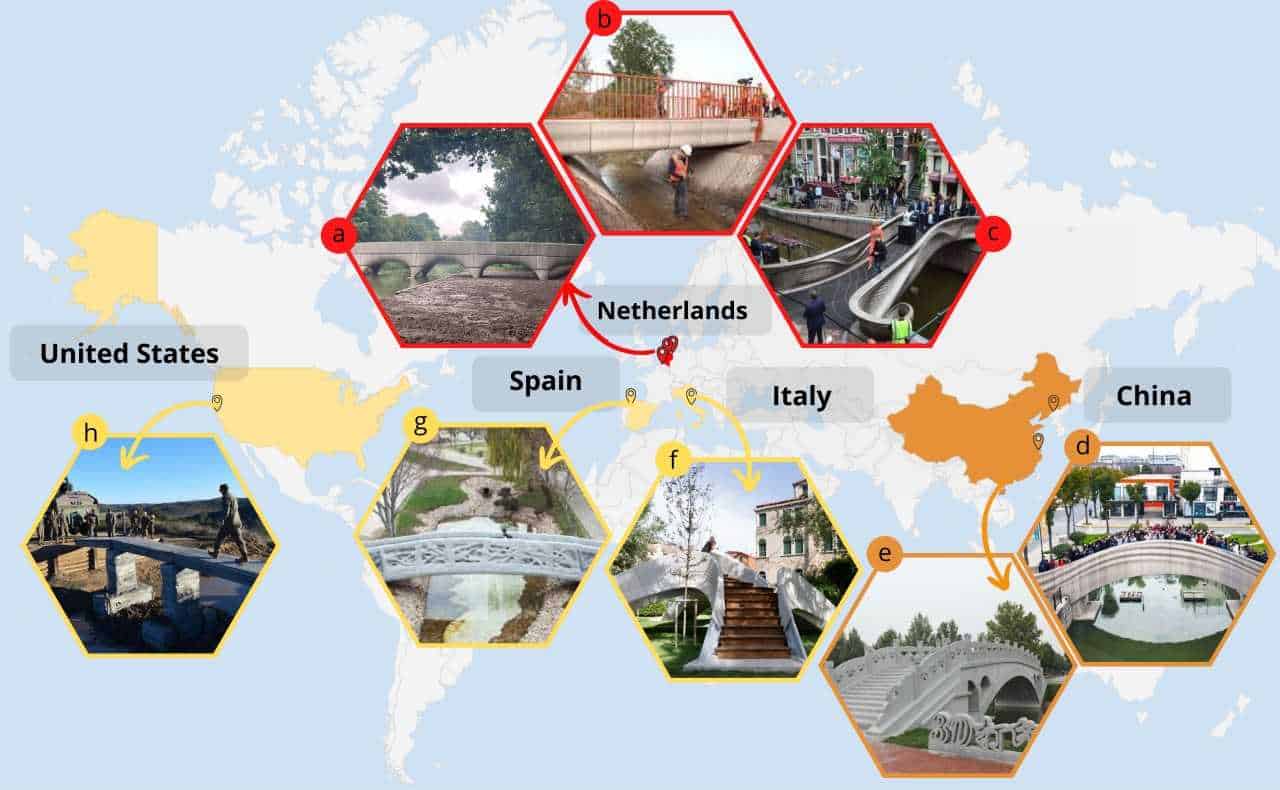
Figure 2 sources: (a) (b) (c) (d) (e) (f) (g) and (h)
Asia-Pacific and Middle-East
China holds the longest 3D printed bridge in the world, and it was awarded the Guinness World Record. This longest Zhaozhou 3D printed bridge in Tianjin has a length of 28.15m and a span of 17.94m. Moreover, this bridge is a 1:2 scale replication of the world’s oldest single arch stone segmental Zhaozhou Bridge. Several built-in sensors were embedded using an intelligent integration method for health monitoring. This bridge has broken the record of 26.3m long 3D printed bridge in Shanghai, China. China is the second country to hold two concrete 3D printed bridges after the Netherlands. Moreover, China has adopted concrete 3D printing technology to manage the pandemic situation by printing Covid Isolation Ward. India, recently, has printed its first house and doffing unit in 2021. Moreover, in Australia, researchers have developed novel strengthening concrete 3D printing methods using inspiring Lobster and Novel hollow-core extrusion to create lightweight concrete 3D printed structures. In early 2020, the world’s first commercial 3D printed building was unveiled in Dubai, UAE. Moreover, Dubai is a home to the world’s largest 3D printed building, which is a 6,900 square foot administrative building of Dubai municipality.
America
The United States of America has planned to use 3D printing for mars human habitations, which takes the technique to the next level. ICON 3D prints the first replicated practical Mars human habitation at NASA’s Johnson Space Center in Houston for the Mars Dune Alpha mission. This simulation is carried out to support long-duration, exploration-class space missions. In addition to that, the American’s military printed the largest 3D printed military barrack building of 3,800 square feet in Texas, North America. It is capable of accommodating 72 men and women during their training period in Camp Swift Training Center.
America has not only adopted and executed the 3D printing technology in the military, however they also have a footprint in 3D printed houses for civilians. For instance, America’s first 3D printed house hit the market for sale in New York with 50 years of structural warranty. The 1500 square foot house with car parking facilities was constructed using 3D printing technology. However, the cost of the 3D printed house is relatively fifty percent lower than a conventional building. Thus, concrete 3D printing technology can be adapted to produce affordable housing in mass production.
Africa
Africa has developed the first 3D printed school of 56 square meters in Malawi to accommodate 50 students. The wall was printed in 18 hours with optimum material usages, and it would take several days with traditional building methods. According to United Nations Children’s Fund (UNICEF) agency estimation, there are 36,000 primary school shortages in Malawi alone. Fulfilling the infrastructure demand using conventional building methods might require 70 years. However, it can be printed in 10 years while using concrete 3D printing. Thus, concrete 3D printing has the potential to fill the global educational infrastructure gap, and it also creates skilled jobs for the local people directly and indirectly by increasing the quality of living.
Concrete 3D printing is mainly used to fabricate buildings, bridges, and other structural elements due to its potential advantages include rapid fabrication, minimum material utilization, eco-friendly and sustainable. Therefore, it is possible to see the rapid growth of concrete 3D printing all around the world. Market and Markets forecasted 245.9% of Compound Annual Growth Rate (CAGR) between 2019 to 2024 before the pandemic. The Global Market Trajectory & Analytics report has estimated the market growth of concrete 3D printing by 332.6% of CAGR growth throughout 2020-2027. After considering the economic crisis due to pandemics, the growth is readjusted and revised to 275.4% CAGR for the analysis period. The Asia-pacific region plays a significant role in the concrete 3D printing market.