

Close Menu
AM ChronicleAM Chronicle
  • Content
    • News
    • Insights
    • Case Studies
    • AM Infocast
  • Focus Regions
    • India
    • Asia Pacific
    • Middle East
    • North America
    • Europe
  • Industries
    • Automotive
    • Aerospace
    • Defence
    • Energy
    • Construction
    • Healthcare
    • Tooling
    • Engineering
  • Training
  • Magazine
    • Digital Issues
  • Events
Facebook Instagram YouTube LinkedIn
  • About us
  • Media Kit
  • Contact us
Facebook Instagram YouTube LinkedIn
AM ChronicleAM Chronicle
  • Content
    1. News
    2. Insights
    3. Case Studies
    4. AM Infocast
    5. View All
    Lodestar3D Boosts Indian Additive Manufacturing with Six TPM3D SLS System Installations

    Lodestar3D Installs Six TPM3D SLS System in Indian Companies

    December 27, 2025
    ARCI and Raghu Vamsi Machine Tools Sign MoU to Advance Additive Manufacturing and Surface Engineering

    ARCI and Raghu Vamsi Machine Tools Sign MoU to Advance Additive Manufacturing and Surface Engineering

    December 26, 2025
    Hang Yu, associate professor of materials science and engineering, with a miniaturized additive friction stir deposition machine used in his advanced manufacturing research. Photo by Peter Means for Virginia Tech.

    Scientists developed a 3D-printed smart composite that allows ceramics to flex under load

    December 25, 2025
    Amandeep Hospitals launches 3D Printing and Virtual Reality Technology facility

    Amandeep Hospitals Unveils North India’s First Hospital-Based 3D Printing and VR Facility

    December 24, 2025
    Gemini Generated Image eyzhd3eyzhd3eyzh

    Breaking the Thermal Barrier: 3D Printing Research on High-Performance Aluminum Alloys Innovates a New Class of Alloys

    December 17, 2025
    Making Milestones: 3D printing for a greener tomorrow

    Making Milestones: 3D printing for a greener tomorrow

    August 29, 2025
    Nestlé embraces technology and innovation in 3D printing

    Nestlé embraces technology and innovation in 3D printing

    August 29, 2025
    Pure copper and copper alloy (CuCrZr, CuCrNb, CuSn10) samples produced using ADDIREEN's green-laser powder bed fusion AM machines (Image courtesy: Addireen Technologies)

    Addireen: Pioneering Copper Printing in Metal Additive Manufacturing

    August 12, 2025
    Source: Formlabs

    Case Study: Eaton Corporation’s Strategic Transition to In-House 3D Printing for Tooling Applications

    August 29, 2025
    Revolutionizing Atherosclerosis Research with 3D-Bioprinted Brain Vessels

    Revolutionizing Atherosclerosis Research with 3D-Bioprinted Brain Vessels

    August 25, 2025
    Formlabs fuse 1+

    How Imaginarium Helped Kaash Studio Scale with the Right 3D Printing Technology

    April 12, 2025
    The Formlabs Fuse 1+ 30W

    Kaash Studio Optimized Service Bureau Operations with Formlabs 3D Printers- Case Study

    January 30, 2025
    Sustainable Production of Metal Powder for Additive Manufacturing

    Sustainable Production of Metal Powder for Additive Manufacturing with Bruce Bradshaw

    February 15, 2024
    Meeting Evolving Customer Demands in the Additive Manufacturing Industry with Tyler Reid

    Meeting Evolving Customer Demands in the Additive Manufacturing Industry with Tyler Reid

    February 9, 2024
    Innovation is at the heart of AMUG with Diana Kalisz

    Innovation is at the heart of AMUG with Diana Kalisz

    March 7, 2023
    3D Printing Workshops at AMUG with Edward Graham

    3D Printing Workshops at AMUG with Edward Graham

    March 7, 2023
    Lodestar3D Boosts Indian Additive Manufacturing with Six TPM3D SLS System Installations

    Lodestar3D Installs Six TPM3D SLS System in Indian Companies

    December 27, 2025
    ARCI and Raghu Vamsi Machine Tools Sign MoU to Advance Additive Manufacturing and Surface Engineering

    ARCI and Raghu Vamsi Machine Tools Sign MoU to Advance Additive Manufacturing and Surface Engineering

    December 26, 2025
    Hang Yu, associate professor of materials science and engineering, with a miniaturized additive friction stir deposition machine used in his advanced manufacturing research. Photo by Peter Means for Virginia Tech.

    Scientists developed a 3D-printed smart composite that allows ceramics to flex under load

    December 25, 2025
    Amandeep Hospitals launches 3D Printing and Virtual Reality Technology facility

    Amandeep Hospitals Unveils North India’s First Hospital-Based 3D Printing and VR Facility

    December 24, 2025
  • Focus Regions
    • India
    • Asia Pacific
    • Middle East
    • North America
    • Europe
  • Industries
    • Automotive
    • Aerospace
    • Defence
    • Energy
    • Construction
    • Healthcare
    • Tooling
    • Engineering
  • Training
  • Magazine
    • Digital Issues
  • Events
Subscribe
AM ChronicleAM Chronicle
Home » News

Ultrasound Makes 3D Printed Parts Stronger and More Durable

News By AM Chronicle Editorial TeamNovember 12, 20225 Mins Read
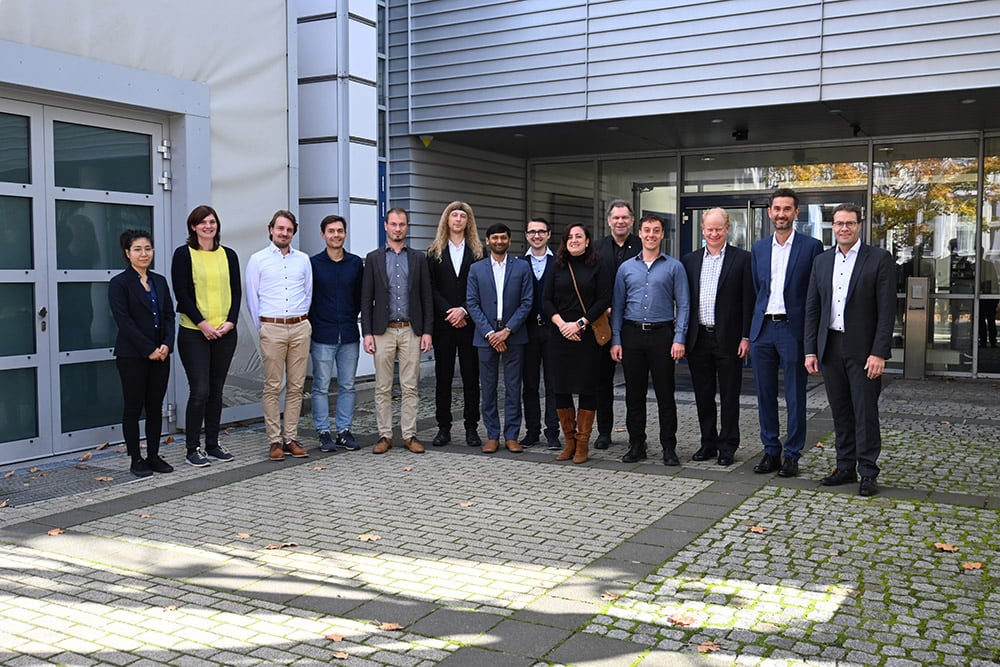
Ultragrain consortium at the Kick-Off-Meeting in Dresden.
© Fraunhofer IWS - Ultragrain consortium at the Kick-Off-Meeting in Dresden.
LinkedIn Twitter Facebook WhatsApp Pinterest Email Copy Link

In the near future, ultrasound will enable industrial 3D printers to manufacture more robust, durable and cheaper components for aerospace, toolmaking and other industries than ever before. Researchers from Dresden, Hamburg and Melbourne, Australia, have joined forces in a research alliance to bring this new technology to market within three years. Their “UltraGrain” project, launched in June 2022, aims to produce a tailored fine-grained microstructure (“grading”) in wire- and powder-based additive manufacturing technologies which promises to improve the mechanical properties and corrosion resistance of the majority of engineering alloys.
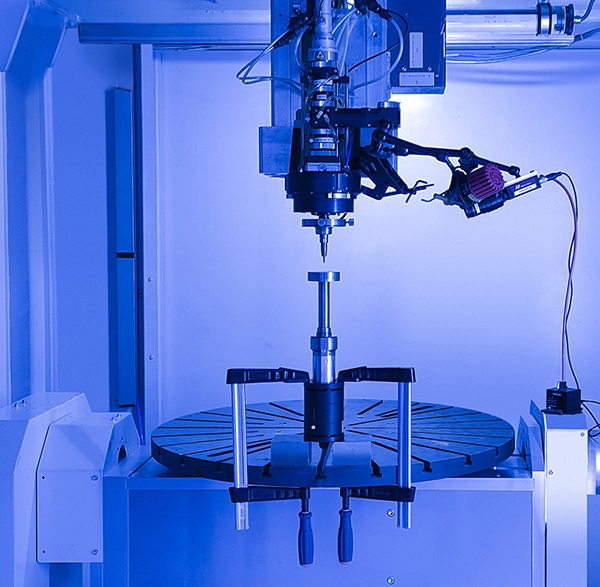
ultrasound assisted laser directed energy deposition
© Fraunhofer IWS
Experimental set-up for ultrasound-assisted laser-directed energy deposition

The Fraunhofer Institute for Material and Beam Technology IWS Dresden, the Fraunhofer Additive Production Technologies Facility IAPT in Hamburg and the RMIT Centre for Additive Manufacturing in Melbourne, Australia, are participating in the four-million-euro project. The official kick-off meeting took place in Dresden on October 11, 2022, under the lead topic “On-demand grading of grain structure by ultrasound-assisted AM – from demonstration to industrialization.”

Dresden and Hamburg Take Cooperation with RMIT and Australia to New Level
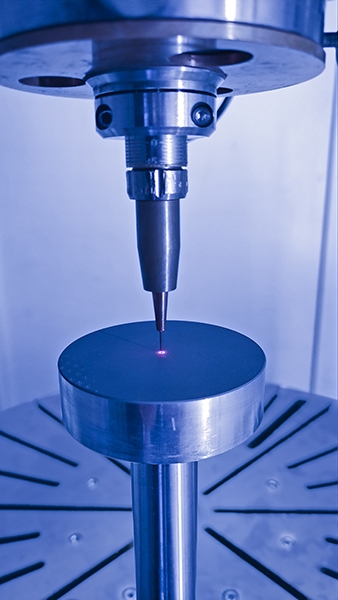
Fraunhofer IWS 41300 Ultragrain Bild 02
© Fraunhofer IWS
In-house developed system technology for ultrasound-assisted laser-directed energy deposition.

“This joint project with RMIT and Fraunhofer IAPT holds a special place in our hearts,” emphasizes Prof. Christoph Leyens, Executive Director of Fraunhofer IWS and Adjunct Professor at RMIT. Prof. Ingomar Kelbassa, Executive Director of Fraunhofer IAPT and also Adjunct Professor at RMIT, agrees: “Both Fraunhofer IAPT and Fraunhofer IWS have been cooperating with the Australian colleagues for a long time through personal contacts. UltraGrain, however, is the first project to receive funding that will lead directly to the transfer of joint research results into industrial practice.” Considering the cooperation with an excellent international institute that is being initiated and deepened here, the Fraunhofer-Gesellschaft is funding the project with 1.5 million euros from its “International Cooperation and Networking” (ICON) program. The Australian partners are contributing a further 2.5 million euros. The scientists involved see great market potential in their collaborative project: “UltraGrain will help bring additive manufacturing to a broad industrial application,” predicts Prof. Christoph Leyens. The RMIT Centre for Additive Manufacturing project collaborators Associate Prof. Andrey Molotnikov, Distinguished Prof. Milan Brandt and Distinguished Prof. Ma Qian are very optimistic about the application of ultrasound to microstructure manipulation. They are convinced that the next generation of aerospace as well as space part additive manufacturing will significantly benefit from the uptake of the ultrasound technology which will be co-developed with the Fraunhofer partners.


Ultrasound Promotes Tailored Grain Size in the Material

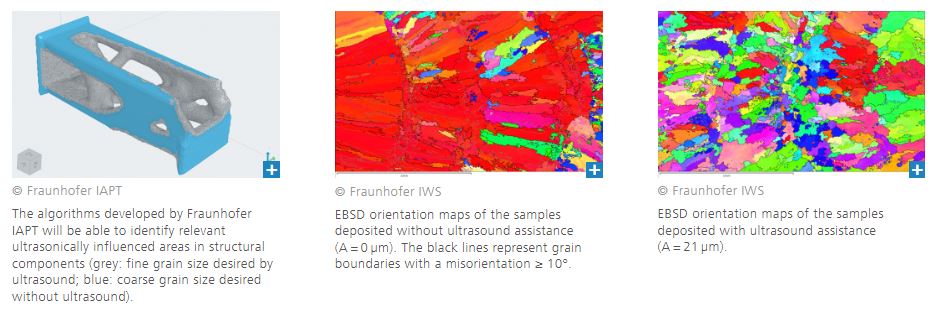
In the process, the researchers are entering new technological territory. With the aim of specifically influencing the internal grain structure of 3D-printed components and thus their mechanical properties, they are combining the established wire- and powder-based laser deposition processes with ultrasound, which vibrates beyond the tones audible to humans. During the additive deposition process, they send fine vibrations with a precisely defined frequency globally through the resulting component or locally following the laser and directly to the melt pool, for example. The ultrasound prevents columnar structures from forming in it. These microscopic columns in the material are often undesirable, because their one-sided alignment results in poorer mechanical performance. However, under ultrasonic action finer, round shaped micrograins are formed, being almost evenly distributed or graded and weakening the undesired texture. This equiaxial alignment increases the mechanical and chemical load-bearing capacity of the additively produced work pieces among others. Because the ultrasound can be controlled in a targeted manner, component designers are able, for example, to specify exactly where the work piece will be subjected to great stresses later in use. There, the developers can plan for an ultrasound-controlled grain structure, but also decide at which points they can do without it in favor of faster production. Such grading is essential, for instance, if gas tanks for space probes have to endure the special challenges of outer space for years to come, or if tools in car factories have to resist even high point loads in mass production.

Prospects: New International Industry Contacts and Revenues

“With UltraGrain we can significantly improve the properties like fatigue resistance, strength, toughness and ductility or reduce the cracking susceptibility of additively manufactured components,” project leader Dr. Elena López from the Fraunhofer IWS explains the resulting prospects. “In addition, this project opens up the opportunity to establish new contacts in Australian industry and increase the international revenues of our institute.”

Fraunhofer IWS contributes to the research alliance, for example, their expertise in laser cladding. In particular, emphasis will be placed on additive processes involving equipment that feeds the desired titanium or steel alloys to the laser in wire form. Investigations with powder-based starting materials are also planned.

Fraunhofer IAPT deals with the optimal design of components with different grain structures. In the sense of a multi-material design, the scientists will develop a methodology for the optimal placement of ultrasonically influenced material areas. Furthermore, Fraunhofer IAPT is concerned with optimal path planning for the new process technology.

As international University partner in UltraGrain, RMIT Centre for Additive Manufacturing will explore the physical processes that ultrasound triggers in the material during the new process approach using advanced synchrotron measurements. The Australian experts will also investigate possible scaling effects. During the transition from pure laboratory production of centimeter-sized components to additively produced series components that span several decimeters or even meters, unexpected side effects may quite possibly occur.

Industrial interest in the new UltraGrain process is already high at the start of the project. Some of the members of the industrial advisory board are internationally active companies from the aerospace, railroad and other industries. Experience shows that such companies represented on the advisory boards of Fraunhofer projects are often among the early adopters of such new technologies.
Ultrasound algorithams

Subscribe to AM Chronicle Newsletter to stay connected:  https://bit.ly/3fBZ1mP 

Follow us on LinkedIn: https://bit.ly/3IjhrFq 

Visit for more interesting content on additive manufacturing: https://amchronicle.com

Original Source

3d printing additive manufacturing Australia research RMIT Centre for Additive Manufacturing UltraGrain Ultrasound
AM Chronicle Editorial Team

The AM Chronicle Editorial Team is a collective of passionate individuals committed to delivering insightful, accurate and engaging stories to additive manufacturing audiences worldwide.

NAMIC GLOBAL AM SUMMIT 2025
LATEST FROM AM
Lodestar3D Boosts Indian Additive Manufacturing with Six TPM3D SLS System Installations News

Lodestar3D Installs Six TPM3D SLS System in Indian Companies

December 27, 20252 Mins Read
ARCI and Raghu Vamsi Machine Tools Sign MoU to Advance Additive Manufacturing and Surface Engineering News

ARCI and Raghu Vamsi Machine Tools Sign MoU to Advance Additive Manufacturing and Surface Engineering

December 26, 20252 Mins Read
Hang Yu, associate professor of materials science and engineering, with a miniaturized additive friction stir deposition machine used in his advanced manufacturing research. Photo by Peter Means for Virginia Tech. News

Scientists developed a 3D-printed smart composite that allows ceramics to flex under load

December 25, 20254 Mins Read

CONNECT WITH US

  • 126 A, Dhuruwadi, A. V. Nagvekar Marg, Prabhadevi, Mumbai 400025
  • [email protected]
  • +91 022 24306319
Facebook Instagram YouTube LinkedIn

Newsletter

Subscribe to the AM Chronicle mailer to receive latest tech updates and insights from global industry experts.

SUBSCRIBE NOW

Quick Links

  • News
  • Insights
  • Case Studies
  • AM Training
  • AM Infocast
  • AM Magazine
  • Events

Media

  • Advertise with us
  • Sponsored Articles
  • Media Kit

Events

CNT Expositions & Services
© 2025 CNT Expositions & Services LLP.
  • Privacy Policy
  • Cookie Policy

Type above and press Enter to search. Press Esc to cancel.


0 / 75