

Close Menu
AM ChronicleAM Chronicle
  • Content
    • News
    • Insights
    • Case Studies
    • AM Infocast
  • Focus Regions
    • India
    • Asia Pacific
    • Middle East
    • North America
    • Europe
  • Industries
    • Automotive
    • Aerospace
    • Defence
    • Energy
    • Construction
    • Healthcare
    • Tooling
    • Engineering
  • Training
  • Magazine
    • Digital Issues
  • Events
Facebook Instagram YouTube LinkedIn
  • About us
  • Media Kit
  • Contact us
Facebook Instagram YouTube LinkedIn
AM ChronicleAM Chronicle
  • Content
    1. News
    2. Insights
    3. Case Studies
    4. AM Infocast
    5. View All
    Caracol and RusselSmith Sign a Strategic Partnership to Drive Advanced Manufacturing in West Africa

    Caracol and RusselSmith Sign a Strategic Partnership to Drive Advanced Manufacturing in West Africa

    October 3, 2025
    NAMI and Lockheed Martin Collaborate for Additive Manufacturing Conversion Project

    NAMI and Lockheed Martin Collaborate for Additive Manufacturing Conversion Project 

    September 16, 2025
    LEGO Introduces First Mass-Produced 3D Printed Piece in New Holiday Train Set

    LEGO Introduces First Mass-Produced 3D Printed Piece in New Holiday Train Set

    September 15, 2025
    Boeing Revolutionizes Satellite Production with 3D-Printed Solar Arrays

    Boeing Revolutionizes Satellite Production with 3D-Printed Solar Arrays

    September 15, 2025
    Making Milestones: 3D printing for a greener tomorrow

    Making Milestones: 3D printing for a greener tomorrow

    August 29, 2025
    Nestlé embraces technology and innovation in 3D printing

    Nestlé embraces technology and innovation in 3D printing

    August 29, 2025
    Pure copper and copper alloy (CuCrZr, CuCrNb, CuSn10) samples produced using ADDIREEN's green-laser powder bed fusion AM machines (Image courtesy: Addireen Technologies)

    Addireen: Pioneering Copper Printing in Metal Additive Manufacturing

    August 12, 2025
    Digital Twin Integration in Additive Manufacturing Systems: Revolutionizing Design, Production, and Lifecycle Management

    Digital Twin Integration in Additive Manufacturing Systems: Revolutionizing Design, Production, and Lifecycle Management

    July 4, 2025
    Source: Formlabs

    Case Study: Eaton Corporation’s Strategic Transition to In-House 3D Printing for Tooling Applications

    August 29, 2025
    Revolutionizing Atherosclerosis Research with 3D-Bioprinted Brain Vessels

    Revolutionizing Atherosclerosis Research with 3D-Bioprinted Brain Vessels

    August 25, 2025
    Formlabs fuse 1+

    How Imaginarium Helped Kaash Studio Scale with the Right 3D Printing Technology

    April 12, 2025
    The Formlabs Fuse 1+ 30W

    Kaash Studio Optimized Service Bureau Operations with Formlabs 3D Printers- Case Study

    January 30, 2025
    Sustainable Production of Metal Powder for Additive Manufacturing

    Sustainable Production of Metal Powder for Additive Manufacturing with Bruce Bradshaw

    February 15, 2024
    Meeting Evolving Customer Demands in the Additive Manufacturing Industry with Tyler Reid

    Meeting Evolving Customer Demands in the Additive Manufacturing Industry with Tyler Reid

    February 9, 2024
    Innovation is at the heart of AMUG with Diana Kalisz

    Innovation is at the heart of AMUG with Diana Kalisz

    March 7, 2023
    3D Printing Workshops at AMUG with Edward Graham

    3D Printing Workshops at AMUG with Edward Graham

    March 7, 2023
    Ms. Larissa Smith, Director, Advanced Manufacturing, DRPM, Maritime Industrial Base Program, U.S. Navy, and Mr. Ken Jeanos, VP, Materials and Supply Chain, General Dynamics Electric Boat, are joined by Lincoln Electric leadership and its Additive Solutions team to commemorate the ribbon cutting that marks the investment of four SculptPrint™ 1500 additive manufacturing cells to support the production of critical submarine components.

    U.S. Navy’s Maritime Industrial Base Program, General Dynamics Electric Boat, and Lincoln Electric Advance Additive Manufacturing to Strengthen Submarine Production

    October 3, 2025
    Caracol and RusselSmith Sign a Strategic Partnership to Drive Advanced Manufacturing in West Africa

    Caracol and RusselSmith Sign a Strategic Partnership to Drive Advanced Manufacturing in West Africa

    October 3, 2025

    Book References

    September 20, 2025
    NAMI and Lockheed Martin Collaborate for Additive Manufacturing Conversion Project

    NAMI and Lockheed Martin Collaborate for Additive Manufacturing Conversion Project 

    September 16, 2025
  • Focus Regions
    • India
    • Asia Pacific
    • Middle East
    • North America
    • Europe
  • Industries
    • Automotive
    • Aerospace
    • Defence
    • Energy
    • Construction
    • Healthcare
    • Tooling
    • Engineering
  • Training
  • Magazine
    • Digital Issues
  • Events
Subscribe
AM ChronicleAM Chronicle
Home » News

Researchers from Korean studied the effectiveness of 3D printed titanium implants on bone development

News By AM Chronicle EditorMay 11, 20225 Mins Read
New study assesses effectiveness of 3D printed titanium implants on
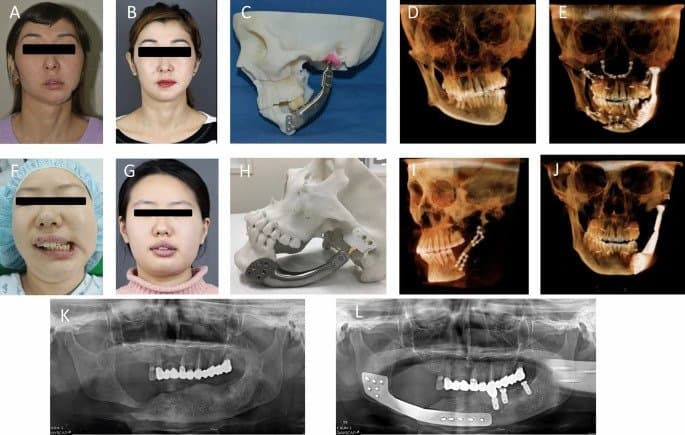
Titanium reconstruction of tumor-induced mandibular defects. Image by way of Nature.
LinkedIn Twitter Facebook WhatsApp Pinterest Email Copy Link

A group of Korean researchers conducted a retrospective study to establish the efficacy and safety of patient-specific 3D printed titanium implants on the maxillofacial bones.

More from the News 

During the study, a total of 16 patients were observed, each of them was undergoing reconstructive surgery for various maxillofacial abnormalities. The patients were equipped with customised titanium implants and had long-term follow-ups over a period of several months.

Only one of the 28 implants used failed to bond properly with the bone, while the others showed “acceptable” results in the treatment of various oral and maxillofacial abnormalities.

Maxillofacial implants printed in 3D

3D printing has long been used to construct guides that enhance patient outcomes, but it has only just begun to be employed on an experimental basis to create face grafts that may be transplanted into patients’ skulls. Scientists at Texas A&M University, for example, have developed a unique 3D printed scaffold that promotes bone cell proliferation following surgery.

In terms of other applications, the Québec Industrial Research Centre (CRIQ) has used a GE Additive Arcam Q10 3D printer to speed up the production of patient-specific lower jawbone implants, while Paulista University researchers 3D printed a facial prosthetic for a Brazilian cancer survivor that included her entire right eye.

Recently, Health Canada approved the first 3D printed medical implant created in Canada, a customisable mandibular plate to be used in face reconstruction surgery, primarily for patients with mouth cancer.
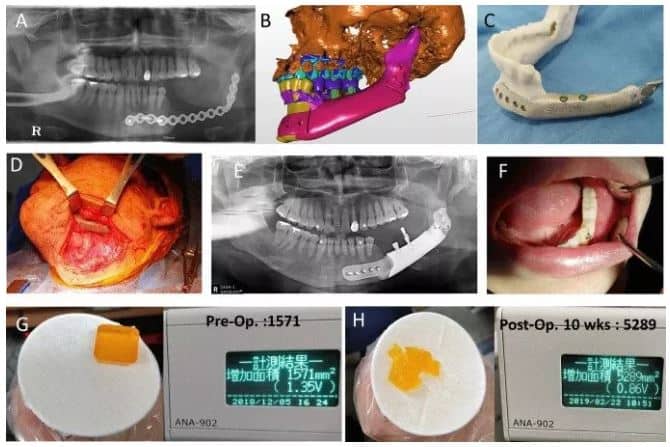
Dental implant on a titanium mandible. Image by way of Nature.

Retrospective investigation

Although autogenous bone grafting or implant insertion is the initial option for treating oral and maxillofacial abnormalities, there may be issues with donor-site morbidity, surgical failure, and reoperation.

Rapid advancements in digital technology have opened up new paths in the field of oral and maxillofacial surgery, with 3D printing allowing for faster and more precise surgical operations, particularly with titanium materials that have previously been proven to be biocompatible as dental implants.

The maxillofacial titanium implants utilized in the surgical procedures documented in the study were 3D printed using electron beam melting (EBM) and selective laser sintering (SLS). In all, 28 implants were 3D printed and implanted into the maxilla (dominant region of the face), mandible (lower jaw), or zygoma (cheek/temple) of 16 distinct patients.

The patients in question, seven of whom were female and nine of whom were male, varied in age from nine to 78. Five mandibular segments, nine zygomas, ten mandibular our bodies, angles, or chins, and four maxillary sections were among the 28 faulty sites that were operated on.

After that, a long-term follow-up program was implemented, ranging in length from eight to 79 months per patient. The study focused on the titanium implant body’s bone fusion, but it also recorded postoperative infection, implant malunion, helpful results, patient satisfaction, subsidence, osteolysis throughout the implants, and any issues that developed.

Only one of the 28 implants failed to fuse with the bone, according to the study. A CBCT scan revealed that 96.5 percent of bone fusion had occurred six months following surgery. There was also no evidence of osteolysis – a degenerative condition in which bone tissue is damaged – or sinking around the titanium implants, according to the study.

According to the study, the patients who participated in the experiment were generally pleased with the aesthetically and functional outcomes of their surgery. However, two of the five patients who had a cheekbone restoration had revision surgery due to dissatisfaction with the implant’s appearance.
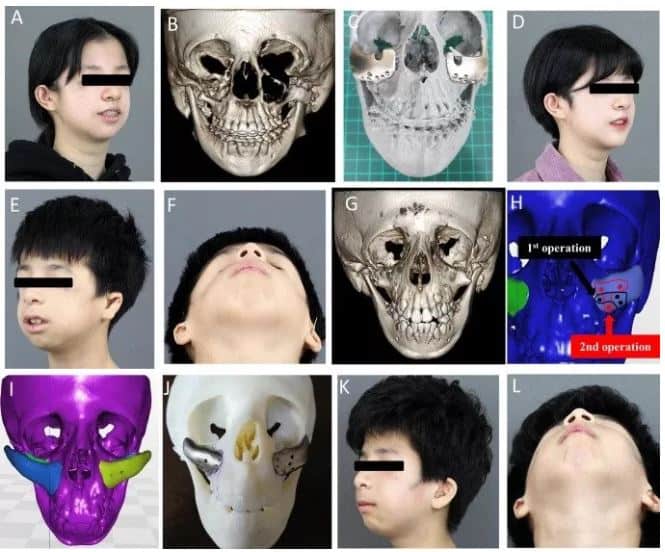
Dental implant 2
Photographs of sufferers with Treacher-Collins syndrome. Image by way of Nature.


Examination of the implants

The bone-to-implant interface of the 3D printed implants was designed as either a mesh or a stable interface, depending on whether or not stability was necessary. This one was the most popular because the mesh titanium implant’s rough surface was proven to be more likely to mix with the patient’s bone.

SLS allows additive manufacture of metals such as titanium at high sintering temperatures; however, because to limited dimensional precision and poor surface roughness, process improvements are being undertaken to improve its capabilities. In order to sinter or fuse the supply, EBM uses an electron beam rather than a laser beam. In contrast to SLS, EBM may be used to fabricate sophisticated geometries by selectively scanning each cross-sectional layer.

Although the implants 3D printed with EBM were more expensive than those 3D printed with SLS, there was no difference in the scientific findings based on the kind of implant interface or the 3D printing technology.

Three of the 16 patients experienced screw fractures and aesthetic dissatisfaction at follow-up sessions, but all of these issues were eventually rectified, and post-operative restoration was found to be acceptable in all patients.

The study has provided recommendations for the use of 3D printed titanium patient-specific implants based on the patients’ experiences. In the short term, the study recommends that such implants be used for continuity defects of the facial bone limited to hard tissue for which reconstruction has already been performed and for which there is no reconstruction option, as well as for instances where there is a delicate or reasonable bone defect as a result of previous extreme bone preparation in a patient with facial osteoplasty.

Furthermore, the criteria state that 3D printed titanium implants must be used in cases of high cosmetic demands, such as correcting skeletal asymmetry, for locations that require functional load bearing, such as the jaw, and when dental implants must be used simultaneously.

Further data on the research could be discovered within the paper titled: “Reconstruction of maxillofacial bone defects using patient-specific long-lasting titanium implants,” printed within the Nature journal. The research was co-authored by H. Lim, Y. Choi, W. Choi, I. Song, and U. Lee.
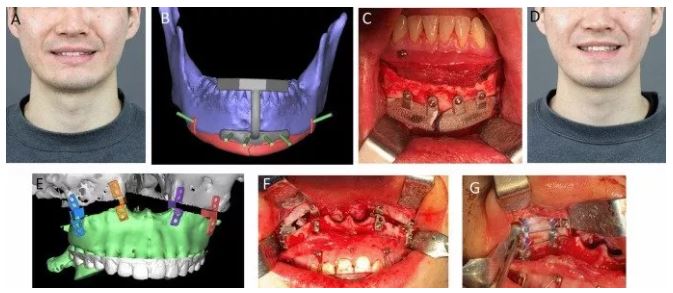
Dental implant 3
One of the restorative surgical procedure case research. Image by way of Nature.

Subscribe to AM Chronicle Newsletter to stay connected:  https://bit.ly/3fBZ1mP 

Follow us on LinkedIn: https://bit.ly/3IjhrFq 

Visit for more interesting content on additive manufacturing: https://amchronicle.com/

Original Source

3D printed titanium implants 3d printing 3D printing research additive manufacturing Implants Korean Medical Metal AM Titanium
AM Chronicle Editor

NAMIC GLOBAL AM SUMMIT 2025
LATEST FROM AM
Ms. Larissa Smith, Director, Advanced Manufacturing, DRPM, Maritime Industrial Base Program, U.S. Navy, and Mr. Ken Jeanos, VP, Materials and Supply Chain, General Dynamics Electric Boat, are joined by Lincoln Electric leadership and its Additive Solutions team to commemorate the ribbon cutting that marks the investment of four SculptPrint™ 1500 additive manufacturing cells to support the production of critical submarine components. Uncategorized

U.S. Navy’s Maritime Industrial Base Program, General Dynamics Electric Boat, and Lincoln Electric Advance Additive Manufacturing to Strengthen Submarine Production

October 3, 20252 Mins Read
Caracol and RusselSmith Sign a Strategic Partnership to Drive Advanced Manufacturing in West Africa News

Caracol and RusselSmith Sign a Strategic Partnership to Drive Advanced Manufacturing in West Africa

October 3, 20252 Mins Read

Book References

September 20, 20257 Mins Read

CONNECT WITH US

  • 126 A, Dhuruwadi, A. V. Nagvekar Marg, Prabhadevi, Mumbai 400025
  • [email protected]
  • +91 022 24306319
Facebook Instagram YouTube LinkedIn

Newsletter

Subscribe to the AM Chronicle mailer to receive latest tech updates and insights from global industry experts.

SUBSCRIBE NOW

Quick Links

  • News
  • Insights
  • Case Studies
  • AM Training
  • AM Infocast
  • AM Magazine
  • Events

Media

  • Advertise with us
  • Sponsored Articles
  • Media Kit

Events

CNT Expositions & Services
© 2025 CNT Expositions & Services LLP.
  • Privacy Policy
  • Cookie Policy

Type above and press Enter to search. Press Esc to cancel.


0 / 75