

Close Menu
AM ChronicleAM Chronicle
  • Content
    • News
    • Insights
    • Case Studies
    • AM Infocast
  • Focus Regions
    • India
    • Asia Pacific
    • Middle East
    • North America
    • Europe
  • Industries
    • Automotive
    • Aerospace
    • Defence
    • Energy
    • Construction
    • Healthcare
    • Tooling
    • Engineering
  • Training
  • Magazine
    • Digital Issues
  • Events
Facebook Instagram YouTube LinkedIn
  • About us
  • Media Kit
  • Contact us
Facebook Instagram YouTube LinkedIn
AM ChronicleAM Chronicle
  • Content
    1. News
    2. Insights
    3. Case Studies
    4. AM Infocast
    5. View All
    Caracol and RusselSmith Sign a Strategic Partnership to Drive Advanced Manufacturing in West Africa

    Caracol and RusselSmith Sign a Strategic Partnership to Drive Advanced Manufacturing in West Africa

    October 3, 2025
    NAMI and Lockheed Martin Collaborate for Additive Manufacturing Conversion Project

    NAMI and Lockheed Martin Collaborate for Additive Manufacturing Conversion Project 

    September 16, 2025
    LEGO Introduces First Mass-Produced 3D Printed Piece in New Holiday Train Set

    LEGO Introduces First Mass-Produced 3D Printed Piece in New Holiday Train Set

    September 15, 2025
    Boeing Revolutionizes Satellite Production with 3D-Printed Solar Arrays

    Boeing Revolutionizes Satellite Production with 3D-Printed Solar Arrays

    September 15, 2025
    Making Milestones: 3D printing for a greener tomorrow

    Making Milestones: 3D printing for a greener tomorrow

    August 29, 2025
    Nestlé embraces technology and innovation in 3D printing

    Nestlé embraces technology and innovation in 3D printing

    August 29, 2025
    Pure copper and copper alloy (CuCrZr, CuCrNb, CuSn10) samples produced using ADDIREEN's green-laser powder bed fusion AM machines (Image courtesy: Addireen Technologies)

    Addireen: Pioneering Copper Printing in Metal Additive Manufacturing

    August 12, 2025
    Digital Twin Integration in Additive Manufacturing Systems: Revolutionizing Design, Production, and Lifecycle Management

    Digital Twin Integration in Additive Manufacturing Systems: Revolutionizing Design, Production, and Lifecycle Management

    July 4, 2025
    Source: Formlabs

    Case Study: Eaton Corporation’s Strategic Transition to In-House 3D Printing for Tooling Applications

    August 29, 2025
    Revolutionizing Atherosclerosis Research with 3D-Bioprinted Brain Vessels

    Revolutionizing Atherosclerosis Research with 3D-Bioprinted Brain Vessels

    August 25, 2025
    Formlabs fuse 1+

    How Imaginarium Helped Kaash Studio Scale with the Right 3D Printing Technology

    April 12, 2025
    The Formlabs Fuse 1+ 30W

    Kaash Studio Optimized Service Bureau Operations with Formlabs 3D Printers- Case Study

    January 30, 2025
    Sustainable Production of Metal Powder for Additive Manufacturing

    Sustainable Production of Metal Powder for Additive Manufacturing with Bruce Bradshaw

    February 15, 2024
    Meeting Evolving Customer Demands in the Additive Manufacturing Industry with Tyler Reid

    Meeting Evolving Customer Demands in the Additive Manufacturing Industry with Tyler Reid

    February 9, 2024
    Innovation is at the heart of AMUG with Diana Kalisz

    Innovation is at the heart of AMUG with Diana Kalisz

    March 7, 2023
    3D Printing Workshops at AMUG with Edward Graham

    3D Printing Workshops at AMUG with Edward Graham

    March 7, 2023
    Ms. Larissa Smith, Director, Advanced Manufacturing, DRPM, Maritime Industrial Base Program, U.S. Navy, and Mr. Ken Jeanos, VP, Materials and Supply Chain, General Dynamics Electric Boat, are joined by Lincoln Electric leadership and its Additive Solutions team to commemorate the ribbon cutting that marks the investment of four SculptPrint™ 1500 additive manufacturing cells to support the production of critical submarine components.

    U.S. Navy’s Maritime Industrial Base Program, General Dynamics Electric Boat, and Lincoln Electric Advance Additive Manufacturing to Strengthen Submarine Production

    October 3, 2025
    Caracol and RusselSmith Sign a Strategic Partnership to Drive Advanced Manufacturing in West Africa

    Caracol and RusselSmith Sign a Strategic Partnership to Drive Advanced Manufacturing in West Africa

    October 3, 2025

    Book References

    September 20, 2025
    NAMI and Lockheed Martin Collaborate for Additive Manufacturing Conversion Project

    NAMI and Lockheed Martin Collaborate for Additive Manufacturing Conversion Project 

    September 16, 2025
  • Focus Regions
    • India
    • Asia Pacific
    • Middle East
    • North America
    • Europe
  • Industries
    • Automotive
    • Aerospace
    • Defence
    • Energy
    • Construction
    • Healthcare
    • Tooling
    • Engineering
  • Training
  • Magazine
    • Digital Issues
  • Events
Subscribe
AM ChronicleAM Chronicle
Home » News

3D Printed Catalysts and their Potential Role in Hypersonic Flights

News By AM Chronicle Editorial TeamSeptember 25, 20214 Mins Read
3D-Printed Catalysts and their Potential Role in Hypersonic Flights
LinkedIn Twitter Facebook WhatsApp Pinterest Email Copy Link

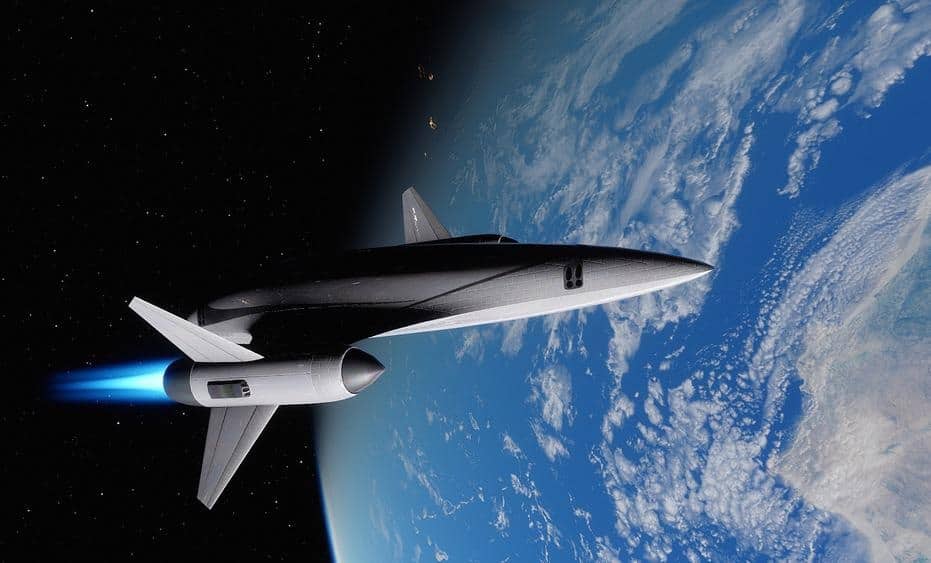
Research into hypersonic flight began back in the 1960s with experiments involving the X-15 rocket-plane. To date, only a few experimental piloted hypersonic planes have successfully reached speeds above Mach 5, which is equivalent to more than 6,100km an hour. Only when this speed is reached are they considered hypersonic. Scientists are interested in developing hypersonic because it would allow long-haul flights to be completed in just a few hours. Flights from London to Sydney, for example, would take just four hours. However, advancements have faced challenges such as the extreme heat that aircraft experience when moving at hypersonic speeds. Now, new research published August 25th, 2021, in the journal Chemical Communications, demonstrates how this limitation may be tackled using 3D printed catalysts.

What are 3D Printed Catalysts?

Additive manufacturing, or 3D printing, is the process of creating objects by layering materials upon one another in a precise manner. The method, which is the opposite of conventional subtractive construction techniques, has been around since the 1980s. It has recently grown in popularity as scientific advancements have expanded the number of practical applications of the technique.

One such application is that of printing catalysts, as 3D printing allows them to be created with specific properties. Chemical and industrial processes that rely on such materials can be enhanced with 3D printing, allowing them to obtain catalysts tailored to fit their purpose.

3D printing has been used to support the production of catalysts for the past two decades. In 2003, for instance, it was utilized to build ceramic support structures of aluminum oxide, which were used as monolithic catalysts. Additionally, as part of the same research project, catalysts made entirely of hexaaluminate were built by 3D printing.

In a new research project, scientists have 3D printed metal alloys into tiny heat exchangers and coated them with zeolites to create catalysts. The hope is that these materials will help advance the development of hypersonic flight.

Pushing Hypersonic Flight Forward with the Help of 3D Printed Catalysts

The ultra-efficient 3D printed catalysts created by the team at the Royal Melbourne Institute of Technology (RMIT) could be fundamental in overcoming the challenge of overheating in hypersonic aircraft. The study shows that these catalysts may provide cutting-edge thermal management that could be implemented across a range of industries.

Researchers report these new materials to be cost-effective with a scalable production, a feature that would benefit the aviation industry in the development of commercial hypersonic flights.

Overcoming the Issue of Overheating

Hypersonic flight vehicles are at risk of overheating due to the extreme temperatures generated from moving at incredibly fast speeds. The 3D printed catalysts developed by the team at RMIT could overcome this challenge by making fuel coolants more efficient and effective.

Scientists have identified that fuels with the capability to absorb heat while powering the aircraft could answer the overheating problem. However, to allow fuels to have sufficient cooling power, heat-consuming chemical reactions are required; highly efficient catalysts are needed to power these reactions.

3D printed catalysts have been proven to be highly efficient and could, theoretically, provide sufficient cooling power while simultaneously powering hypersonic aircraft.

A Revolutionary Solution to Thermal Management Across Industries

The new 3D printed catalysts act like chemical reactors as the structures heat up and the metals move into the zeolite framework, which is the key to the incredibly high effectiveness of the catalysts.

Next, scientists will need to uncover more about the nature of the catalysts that they have created. The team plans to study them with an X-ray synchrotron to understand the best combination of metal alloys for the highest efficiency. Once optimized, the 3D catalysts will not only be useful to advancing the field of hypersonic flight, but all industries that rely on efficient chemical reactions may also benefit.

This revolutionary approach to thermal management could be leveraged into a range of potential applications, including those that manage air pollution to improve indoor air quality. This area has become intensely focused on since the start of the pandemic.

The Future for 3D Printed Catalysts and Hypersonic Flight

Currently, there is minimal research into 3D printed catalysts and hypersonic flight. Before these new catalysts can be used in hypersonic aircraft fuel, further studies are required to understand its properties, how it can be optimized, its safety, and the applicability of 3D catalysts in other applications. In the coming years, we will likely see more studies in this field.

Original Content

3d printing Additive Manufactruing Aerospace Engineering
AM Chronicle Editorial Team

The AM Chronicle Editorial Team is a collective of passionate individuals committed to delivering insightful, accurate and engaging stories to additive manufacturing audiences worldwide.

NAMIC GLOBAL AM SUMMIT 2025
LATEST FROM AM
Ms. Larissa Smith, Director, Advanced Manufacturing, DRPM, Maritime Industrial Base Program, U.S. Navy, and Mr. Ken Jeanos, VP, Materials and Supply Chain, General Dynamics Electric Boat, are joined by Lincoln Electric leadership and its Additive Solutions team to commemorate the ribbon cutting that marks the investment of four SculptPrint™ 1500 additive manufacturing cells to support the production of critical submarine components. Uncategorized

U.S. Navy’s Maritime Industrial Base Program, General Dynamics Electric Boat, and Lincoln Electric Advance Additive Manufacturing to Strengthen Submarine Production

October 3, 20252 Mins Read
Caracol and RusselSmith Sign a Strategic Partnership to Drive Advanced Manufacturing in West Africa News

Caracol and RusselSmith Sign a Strategic Partnership to Drive Advanced Manufacturing in West Africa

October 3, 20252 Mins Read

Book References

September 20, 20257 Mins Read

CONNECT WITH US

  • 126 A, Dhuruwadi, A. V. Nagvekar Marg, Prabhadevi, Mumbai 400025
  • [email protected]
  • +91 022 24306319
Facebook Instagram YouTube LinkedIn

Newsletter

Subscribe to the AM Chronicle mailer to receive latest tech updates and insights from global industry experts.

SUBSCRIBE NOW

Quick Links

  • News
  • Insights
  • Case Studies
  • AM Training
  • AM Infocast
  • AM Magazine
  • Events

Media

  • Advertise with us
  • Sponsored Articles
  • Media Kit

Events

CNT Expositions & Services
© 2025 CNT Expositions & Services LLP.
  • Privacy Policy
  • Cookie Policy

Type above and press Enter to search. Press Esc to cancel.


0 / 75