

Close Menu
AM ChronicleAM Chronicle
  • Content
    • News
    • Insights
    • Case Studies
    • AM Infocast
  • Focus Regions
    • India
    • Asia Pacific
    • Middle East
    • North America
    • Europe
  • Industries
    • Automotive
    • Aerospace
    • Defence
    • Energy
    • Construction
    • Healthcare
    • Tooling
    • Engineering
  • Training
  • Magazine
    • Digital Issues
  • Events
Facebook Instagram YouTube LinkedIn
  • About us
  • Media Kit
  • Contact us
Facebook Instagram YouTube LinkedIn
AM ChronicleAM Chronicle
  • Content
    1. News
    2. Insights
    3. Case Studies
    4. AM Infocast
    5. View All
    Caracol and RusselSmith Sign a Strategic Partnership to Drive Advanced Manufacturing in West Africa

    Caracol and RusselSmith Sign a Strategic Partnership to Drive Advanced Manufacturing in West Africa

    October 3, 2025
    NAMI and Lockheed Martin Collaborate for Additive Manufacturing Conversion Project

    NAMI and Lockheed Martin Collaborate for Additive Manufacturing Conversion Project 

    September 16, 2025
    LEGO Introduces First Mass-Produced 3D Printed Piece in New Holiday Train Set

    LEGO Introduces First Mass-Produced 3D Printed Piece in New Holiday Train Set

    September 15, 2025
    Boeing Revolutionizes Satellite Production with 3D-Printed Solar Arrays

    Boeing Revolutionizes Satellite Production with 3D-Printed Solar Arrays

    September 15, 2025
    Making Milestones: 3D printing for a greener tomorrow

    Making Milestones: 3D printing for a greener tomorrow

    August 29, 2025
    Nestlé embraces technology and innovation in 3D printing

    Nestlé embraces technology and innovation in 3D printing

    August 29, 2025
    Pure copper and copper alloy (CuCrZr, CuCrNb, CuSn10) samples produced using ADDIREEN's green-laser powder bed fusion AM machines (Image courtesy: Addireen Technologies)

    Addireen: Pioneering Copper Printing in Metal Additive Manufacturing

    August 12, 2025
    Digital Twin Integration in Additive Manufacturing Systems: Revolutionizing Design, Production, and Lifecycle Management

    Digital Twin Integration in Additive Manufacturing Systems: Revolutionizing Design, Production, and Lifecycle Management

    July 4, 2025
    Source: Formlabs

    Case Study: Eaton Corporation’s Strategic Transition to In-House 3D Printing for Tooling Applications

    August 29, 2025
    Revolutionizing Atherosclerosis Research with 3D-Bioprinted Brain Vessels

    Revolutionizing Atherosclerosis Research with 3D-Bioprinted Brain Vessels

    August 25, 2025
    Formlabs fuse 1+

    How Imaginarium Helped Kaash Studio Scale with the Right 3D Printing Technology

    April 12, 2025
    The Formlabs Fuse 1+ 30W

    Kaash Studio Optimized Service Bureau Operations with Formlabs 3D Printers- Case Study

    January 30, 2025
    Sustainable Production of Metal Powder for Additive Manufacturing

    Sustainable Production of Metal Powder for Additive Manufacturing with Bruce Bradshaw

    February 15, 2024
    Meeting Evolving Customer Demands in the Additive Manufacturing Industry with Tyler Reid

    Meeting Evolving Customer Demands in the Additive Manufacturing Industry with Tyler Reid

    February 9, 2024
    Innovation is at the heart of AMUG with Diana Kalisz

    Innovation is at the heart of AMUG with Diana Kalisz

    March 7, 2023
    3D Printing Workshops at AMUG with Edward Graham

    3D Printing Workshops at AMUG with Edward Graham

    March 7, 2023
    Ms. Larissa Smith, Director, Advanced Manufacturing, DRPM, Maritime Industrial Base Program, U.S. Navy, and Mr. Ken Jeanos, VP, Materials and Supply Chain, General Dynamics Electric Boat, are joined by Lincoln Electric leadership and its Additive Solutions team to commemorate the ribbon cutting that marks the investment of four SculptPrintâ„¢ 1500 additive manufacturing cells to support the production of critical submarine components.

    U.S. Navy’s Maritime Industrial Base Program, General Dynamics Electric Boat, and Lincoln Electric Advance Additive Manufacturing to Strengthen Submarine Production

    October 3, 2025
    Caracol and RusselSmith Sign a Strategic Partnership to Drive Advanced Manufacturing in West Africa

    Caracol and RusselSmith Sign a Strategic Partnership to Drive Advanced Manufacturing in West Africa

    October 3, 2025

    Book References

    September 20, 2025
    NAMI and Lockheed Martin Collaborate for Additive Manufacturing Conversion Project

    NAMI and Lockheed Martin Collaborate for Additive Manufacturing Conversion Project 

    September 16, 2025
  • Focus Regions
    • India
    • Asia Pacific
    • Middle East
    • North America
    • Europe
  • Industries
    • Automotive
    • Aerospace
    • Defence
    • Energy
    • Construction
    • Healthcare
    • Tooling
    • Engineering
  • Training
  • Magazine
    • Digital Issues
  • Events
Subscribe
AM ChronicleAM Chronicle
Home » Insights

Uses and prospects for 3D printing in pharmacology

Insights By Aditya ChandavarkarJune 12, 20205 Mins Read
shutterstock 1086766697
LinkedIn Twitter Facebook WhatsApp Pinterest Email Copy Link
Three-dimensional (3D) technology is considered one of the promising areas of medicine. The world has already seen printed anatomical prostheses, hearing aids, heart valves, biological tissues and many others. Therefore, innovative 3D scanning and printing systems have the potential to open up new opportunities in pharmacology that are difficult to estimate.As such, 3D printing also has a great significance in pharmacology. Its use in this area forms the basis of a new concept for patient-centric treatment. Through additive pill manufacturing, personalised medicines and therapies can be developed. This can help patients receive the most effective treatment at the most cost-effective price.

Over the past five years, scientists have been actively exploring the potential of 3D printing in the pharmacology industry. Due to the high flexibility of its nature and almost unlimited possibilities, it has the potential to be revolutionary to medicine.

Benefits of 3D technology

The benefits of 3D technology in compounding pharmacies include:

  • the ability to create tablets of any shape and size
  • the ability to set the dosage individually for each patient
  • the ability to regulate the number of active substances in the composition of the tablet, remove or replace individual components. This will help many people take medicine even if there are contraindications to a single substance.
  • the ability to replace a large number of drugs with one tablet, which also reduces the frequency of medication
  • the ability to control the process of release of active substances allows to slow down or accelerate the effect of the drug, which will increase the effectiveness of tablets
  • the larger availability of drugs that can be obtained at any pharmacy with a 3D printer if a patient has a doctor’s prescription
  • eco-friendly production – in the process of manufacturing tablets with a 3D printer, no waste pollutes the environment
  • the ability to print small batches of drugs, saving money on the production and testing of drugs in comparison with the traditional method
  • the manufacture of tablets on a 3D printer eliminates the possibility to mix up drugs or take other patient’s tablets by mistake
  • for the manufacture of drugs, a 3D printer is the only piece of required equipment. Therefore, mini-factories for the production of tablets can be in each local region. Such printers can even be installed in military hospitals and taken on space expeditions. This could help patients to get appropriate medications even during a pandemic, natural disaster or other events.

One of the new features of 3D printing in the future will be the delivery of custom-made drugs to remote places in the world where pharmaceutical supply chains are poorly developed. In 2020, many companies are already operating in the telemedicine field.

The prospects for 3D printing in compounding pharmacy are far-reaching. By installing 3D printers in the pharmacies of each locale, it will be possible to raise the level of medicine accessibility to a new level.
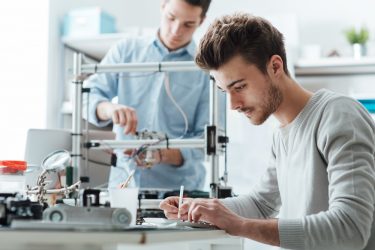
Researchers 3D printingThanks to the individualisation of the treatment process, 3D technology will lay the foundation for the treatment of less common diseases. Since the mass production of tablets is not required, it will be possible to reduce financial costs and time for conducting clinical trials of drugs as test batches can be manufactured in minimal quantities.

Currently, medicine is computerised, patients have medical history cards and detailed information about treatment in an online format. Therefore, if all pharmacies are provided with printers, a patient could move or travel and not have to worry that they will be unable to get his treatment or that they will not be able to find the right pills elsewhere in the world.

What is important to remember about 3D printing of pharmaceuticals

A large number of studies have revealed that there are some limitations during the 3D manufacturing of tablets. These are related to the fact that for each individual medicine, specific substances and ingredients are required.

To create tablets, four kinds of 3D printing can be used:

  • Fused Deposition Modelling (FDM)
  • Selective Laser Sintering (SLS)
  • Stereolithography (SLA)
  • 3D technology for creating biological tissues (3D bioprinting).

Thus, it is possible to choose the method of printing only after a detailed study of a specific disease, its treatment mechanisms and the identification of the required active substances to combat the disease. Before creating a prescription for the manufacture of tablets, it is important to consider the compatibility of materials and type of printing.

Pills coming out of bottleIn addition to research in medicine, companies that produce 3D software can accelerate the development of pharmacology. That is why the unification of the common efforts of scientific and technical societies around the world is very important for collaboration.

In summary, 3D printing has already shown an attractive flexibility for the manufacture of drugs. The development of this branch in pharmacology will help to cure many rare and common diseases. 3D technologies will reduce the period of treatment, remove negative symptoms and eliminate contraindications to tablets due to an individualised approach. The compactness of 3D platforms, computerisation of displays which will allow receipt of real-time prescription from doctors for the production of 3D tablets, will also help to provide even remote areas with essential medicine.

Source: www.europeanpharmaceuticalreview.com | By Alina Dvoretskaya, The uses and prospects for 3D printing in pharmacology

 

Aditya Chandavarkar
Aditya Chandavarkar
Website
Aditya Chandavarkar is a established entrepreneur with business interests in manufacturing, innovative technology, training and consulting. Among other activities he the Co-Founder of Indian 3D Printing Network and is a subject matter expert on 3D Printing/Additive Manufacturing with good grasp of Additive Manufacturing trends in the Region including India, APAC, Middleeast and Africa.
3d printing 3D technology additive manufacturing Pharmacology
Aditya Chandavarkar
  • Website

Aditya Chandavarkar is a established entrepreneur with business interests in manufacturing, innovative technology, training and consulting. Among other activities he the Co-Founder of Indian 3D Printing Network and is a subject matter expert on 3D Printing/Additive Manufacturing with good grasp of Additive Manufacturing trends in the Region including India, APAC, Middleeast and Africa.

NAMIC GLOBAL AM SUMMIT 2025
LATEST FROM AM
Ms. Larissa Smith, Director, Advanced Manufacturing, DRPM, Maritime Industrial Base Program, U.S. Navy, and Mr. Ken Jeanos, VP, Materials and Supply Chain, General Dynamics Electric Boat, are joined by Lincoln Electric leadership and its Additive Solutions team to commemorate the ribbon cutting that marks the investment of four SculptPrintâ„¢ 1500 additive manufacturing cells to support the production of critical submarine components. Uncategorized

U.S. Navy’s Maritime Industrial Base Program, General Dynamics Electric Boat, and Lincoln Electric Advance Additive Manufacturing to Strengthen Submarine Production

October 3, 20252 Mins Read
Caracol and RusselSmith Sign a Strategic Partnership to Drive Advanced Manufacturing in West Africa News

Caracol and RusselSmith Sign a Strategic Partnership to Drive Advanced Manufacturing in West Africa

October 3, 20252 Mins Read

Book References

September 20, 20257 Mins Read

CONNECT WITH US

  • 126 A, Dhuruwadi, A. V. Nagvekar Marg, Prabhadevi, Mumbai 400025
  • [email protected]
  • +91 022 24306319
Facebook Instagram YouTube LinkedIn

Newsletter

Subscribe to the AM Chronicle mailer to receive latest tech updates and insights from global industry experts.

SUBSCRIBE NOW

Quick Links

  • News
  • Insights
  • Case Studies
  • AM Training
  • AM Infocast
  • AM Magazine
  • Events

Media

  • Advertise with us
  • Sponsored Articles
  • Media Kit

Events

CNT Expositions & Services
© 2025 CNT Expositions & Services LLP.
  • Privacy Policy
  • Cookie Policy

Type above and press Enter to search. Press Esc to cancel.


0 / 75