

Close Menu
AM ChronicleAM Chronicle
  • Content
    • News
    • Insights
    • Case Studies
    • AM Infocast
  • Focus Regions
    • India
    • Asia Pacific
    • Middle East
    • North America
    • Europe
  • Industries
    • Automotive
    • Aerospace
    • Defence
    • Energy
    • Construction
    • Healthcare
    • Tooling
    • Engineering
  • Training
  • Magazine
    • Digital Issues
  • Events
Facebook Instagram YouTube LinkedIn
  • About us
  • Media Kit
  • Contact us
Facebook Instagram YouTube LinkedIn
AM ChronicleAM Chronicle
  • Content
    1. News
    2. Insights
    3. Case Studies
    4. AM Infocast
    5. View All
    Caracol and RusselSmith Sign a Strategic Partnership to Drive Advanced Manufacturing in West Africa

    Caracol and RusselSmith Sign a Strategic Partnership to Drive Advanced Manufacturing in West Africa

    October 3, 2025
    NAMI and Lockheed Martin Collaborate for Additive Manufacturing Conversion Project

    NAMI and Lockheed Martin Collaborate for Additive Manufacturing Conversion Project 

    September 16, 2025
    LEGO Introduces First Mass-Produced 3D Printed Piece in New Holiday Train Set

    LEGO Introduces First Mass-Produced 3D Printed Piece in New Holiday Train Set

    September 15, 2025
    Boeing Revolutionizes Satellite Production with 3D-Printed Solar Arrays

    Boeing Revolutionizes Satellite Production with 3D-Printed Solar Arrays

    September 15, 2025
    Making Milestones: 3D printing for a greener tomorrow

    Making Milestones: 3D printing for a greener tomorrow

    August 29, 2025
    Nestlé embraces technology and innovation in 3D printing

    Nestlé embraces technology and innovation in 3D printing

    August 29, 2025
    Pure copper and copper alloy (CuCrZr, CuCrNb, CuSn10) samples produced using ADDIREEN's green-laser powder bed fusion AM machines (Image courtesy: Addireen Technologies)

    Addireen: Pioneering Copper Printing in Metal Additive Manufacturing

    August 12, 2025
    Digital Twin Integration in Additive Manufacturing Systems: Revolutionizing Design, Production, and Lifecycle Management

    Digital Twin Integration in Additive Manufacturing Systems: Revolutionizing Design, Production, and Lifecycle Management

    July 4, 2025
    Source: Formlabs

    Case Study: Eaton Corporation’s Strategic Transition to In-House 3D Printing for Tooling Applications

    August 29, 2025
    Revolutionizing Atherosclerosis Research with 3D-Bioprinted Brain Vessels

    Revolutionizing Atherosclerosis Research with 3D-Bioprinted Brain Vessels

    August 25, 2025
    Formlabs fuse 1+

    How Imaginarium Helped Kaash Studio Scale with the Right 3D Printing Technology

    April 12, 2025
    The Formlabs Fuse 1+ 30W

    Kaash Studio Optimized Service Bureau Operations with Formlabs 3D Printers- Case Study

    January 30, 2025
    Sustainable Production of Metal Powder for Additive Manufacturing

    Sustainable Production of Metal Powder for Additive Manufacturing with Bruce Bradshaw

    February 15, 2024
    Meeting Evolving Customer Demands in the Additive Manufacturing Industry with Tyler Reid

    Meeting Evolving Customer Demands in the Additive Manufacturing Industry with Tyler Reid

    February 9, 2024
    Innovation is at the heart of AMUG with Diana Kalisz

    Innovation is at the heart of AMUG with Diana Kalisz

    March 7, 2023
    3D Printing Workshops at AMUG with Edward Graham

    3D Printing Workshops at AMUG with Edward Graham

    March 7, 2023
    Ms. Larissa Smith, Director, Advanced Manufacturing, DRPM, Maritime Industrial Base Program, U.S. Navy, and Mr. Ken Jeanos, VP, Materials and Supply Chain, General Dynamics Electric Boat, are joined by Lincoln Electric leadership and its Additive Solutions team to commemorate the ribbon cutting that marks the investment of four SculptPrintâ„¢ 1500 additive manufacturing cells to support the production of critical submarine components.

    U.S. Navy’s Maritime Industrial Base Program, General Dynamics Electric Boat, and Lincoln Electric Advance Additive Manufacturing to Strengthen Submarine Production

    October 3, 2025
    Caracol and RusselSmith Sign a Strategic Partnership to Drive Advanced Manufacturing in West Africa

    Caracol and RusselSmith Sign a Strategic Partnership to Drive Advanced Manufacturing in West Africa

    October 3, 2025

    Book References

    September 20, 2025
    NAMI and Lockheed Martin Collaborate for Additive Manufacturing Conversion Project

    NAMI and Lockheed Martin Collaborate for Additive Manufacturing Conversion Project 

    September 16, 2025
  • Focus Regions
    • India
    • Asia Pacific
    • Middle East
    • North America
    • Europe
  • Industries
    • Automotive
    • Aerospace
    • Defence
    • Energy
    • Construction
    • Healthcare
    • Tooling
    • Engineering
  • Training
  • Magazine
    • Digital Issues
  • Events
Subscribe
AM ChronicleAM Chronicle
Home » Insights

The Additive Manufacturing Process Explained | Types and Process

Insights By AM Chronicle EditorApril 12, 20216 Mins Read
The Additive Manufacturing Process Explained
LinkedIn Twitter Facebook WhatsApp Pinterest Email Copy Link

Additive manufacturing, also known as 3D printing, is a process of manufacturing a solid object in a layer-by-layer form. The technology is heralding a new age in product manufacturing by building complex objects that are impossible to manufacture through traditional processes. However, it is not a single technology but a multitude of technologies that operate on theprinciple of additively manufacturing a product. In this article, we’ll look at the additive manufacturing process and aim to understand the typesof additive manufacturing technologies.

The additive manufacturing process

Additive manufacturing is a four-step process:

CAD design
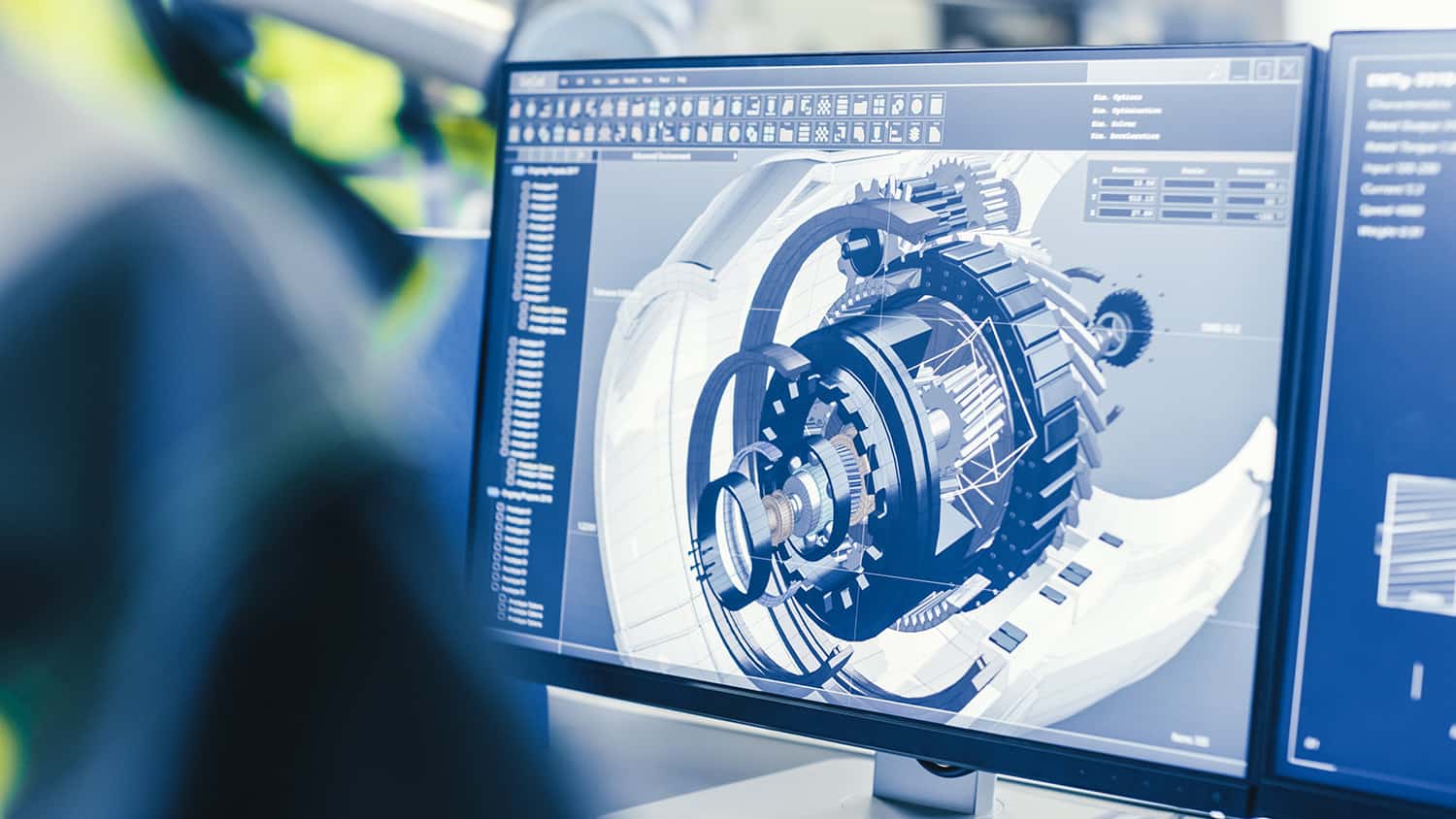
The starting point of every additive manufacturing process is a CAD design. This is a digital model of the object to be manufactured. Design engineers create a CAD model in software like CATIA, Creo, Rhino, Fusion 360, or Tinkercad. This CAD design is saved in machine-readable formats like STL, OBJ, or STEP.

Slicing
The next step is to input the design file into a slicing software or slicer. The slicer slices the model into thin layers along the z-axis. These slices convert the 3D model into a sequence of 2D layers. The slicer also assigns coordinates to the slices so the printhead moves accordingly. Another function of the slicer is to control various parameters of the print, like layer height, speed, the temperature of the extruder and bed, retraction, support, and infill. The output from the slicer is a G-code text file that the 3D printer can read and understand.

3D printing
This is the step where the design is converted into a solid object. The file received from the slicer is loaded into a 3D printer. Before starting the print, users also have to prep the machine, which includes loading the material and heating the build chamber and material. Once everything is set, the print is started, and through layer-by-layer deposition (in FDM/FFF), laser curing (in SLA/DLP), or laser fusion (in SLS, DMLS, SLM, binder jetting), the three-
dimensional part is formed.

Post-processing
The additive manufacturing process does not end with the 3D printing of the object. The last step is post-processing, which involves the removal of the object from the print bed. Depending on the 3D-printed part, users also have to remove any support structures, cure it in a UV chamber, sinter it, or enhance its look and feel by sanding, polishing, painting or electroplating the final object.

Seven Types of Additive Manufacturing Technologies

The American Society for Testing and Materials (ASTM) has classified the additive manufacturing processes into seven categories. Let’s take a quick look at these seven technologies to explain everything you need to know as a manufacturer.

Vat photopolymerisation
Vat photopolymerisation is resin-based 3D printing. The world’s first 3D printing technology, stereolithography (SLA), falls under this category. In this technology, a vat of liquid photosensitive polymer resin is exposed to a laser or UV light. The laser or light traces the geometry of the object to be printed. The light cures the liquid resin and a solid layer is formed. This process is then repeated till the entire object is formed. In addition to SLA, popular technologies included in vat photopolymerisation are digital light processing (DLP) and digital light synthesis™ (DLS™).

Material extrusion
Fused deposition modeling (FDM) is the most popular technology under the umbrella of material extrusion. This technology is also known as fused filament fabrication (FFF). In this technology, a thermoplastic filament is drawn inside the 3D printer through a nozzle. The material is then heated, extruded through the nozzle, and deposited onto the build platform in a layer-by-layer process.

Powder bed fusion
Powder bed fusion (PBF) method uses powdered materials (polymers or metals), and the method is further divided into subcategories depending on the heat source used. The powdered material is spread across a build platform where the adjacent particles are fused with the help of a powerful laser or electron beam. Popular laser powder bed fusion technologies include selective laser sintering (SLS), direct metal laser sintering (DMLS), and selective laser melting (SLM), whereas electron-based powder bed fusion technology is known as electron beam melting.

Material jetting
Material jetting is similar to the process of a traditional 2D inkjet printer. Similar to the inkjet operation, in material jetting, a liquid photosensitive polymer material is dispensed from multiple printheads. This material is cured with the help of a powerful UV light source for individual layers. Sometimes this technology is called drop on demand (DOD).

Binder jetting
Binder jetting can be considered an amalgamation of PBF and material jetting. This technology uses powdered materials, as in PBF, and a liquid material like in material jetting. The powdered material is spread across the print bed and a liquid binder is dispensed according to the geometry of the object to be 3D-printed. This binder helps adjacent particles to adhere to each other, forming a strong bond. The process is repeated until the entire object is 3D-printed.

Sheet lamination
This category includes two subtypes: laminated object manufacturing (LOM) and ultrasonic additive manufacturing (UAM). LOM uses sheets of paper that are bound with the help of adhesives. Rollers are used to feed paper into the 3D printer. A laser traces the cross section of the object. It makes use of the crosshatch method to ensure that the 3D-printed part is easy to remove. A LOM 3D-printed part is only suitable for aesthetic, design communication, and prototyping purposes. Similar to the LOM process, the UAM technology uses metal sheets or ribbons to 3D-print an object. Every single sheet acts as a layer that is bonded together using ultrasonic welding. This process is repeated for every sheet until the object is formed.

Directed energy deposition
Directed energy deposition (DED) is widely used for 3D-printing metals and alloys. In this technology, a nozzle holding a metal wire, called a feed, traces the geometry of the cross section of the object. The feed is subjected to a powerful heat source, such as a plasma arc, laser, or electron beam. This melts the feed wire and the material is deposited on the platform. DED is also popularly known as laser engineered net shaping (LENS) and direct metal deposition. Unlike other methods, DED can also be used for repairs by adding materials onto existing parts.

AM Chronicle
AM Chronicle Editor
3d printing additive manufacturing AM Chronicle Binder Jetting CAD Design Directed Energy Deposition innovation material extrusion Material jetting Post processing Powder Bed Fusion sheet lamination Slicing technology Vat Photopolymerisation
AM Chronicle Editor

NAMIC GLOBAL AM SUMMIT 2025
LATEST FROM AM
Ms. Larissa Smith, Director, Advanced Manufacturing, DRPM, Maritime Industrial Base Program, U.S. Navy, and Mr. Ken Jeanos, VP, Materials and Supply Chain, General Dynamics Electric Boat, are joined by Lincoln Electric leadership and its Additive Solutions team to commemorate the ribbon cutting that marks the investment of four SculptPrintâ„¢ 1500 additive manufacturing cells to support the production of critical submarine components. Uncategorized

U.S. Navy’s Maritime Industrial Base Program, General Dynamics Electric Boat, and Lincoln Electric Advance Additive Manufacturing to Strengthen Submarine Production

October 3, 20252 Mins Read
Caracol and RusselSmith Sign a Strategic Partnership to Drive Advanced Manufacturing in West Africa News

Caracol and RusselSmith Sign a Strategic Partnership to Drive Advanced Manufacturing in West Africa

October 3, 20252 Mins Read

Book References

September 20, 20257 Mins Read

CONNECT WITH US

  • 126 A, Dhuruwadi, A. V. Nagvekar Marg, Prabhadevi, Mumbai 400025
  • [email protected]
  • +91 022 24306319
Facebook Instagram YouTube LinkedIn

Newsletter

Subscribe to the AM Chronicle mailer to receive latest tech updates and insights from global industry experts.

SUBSCRIBE NOW

Quick Links

  • News
  • Insights
  • Case Studies
  • AM Training
  • AM Infocast
  • AM Magazine
  • Events

Media

  • Advertise with us
  • Sponsored Articles
  • Media Kit

Events

CNT Expositions & Services
© 2025 CNT Expositions & Services LLP.
  • Privacy Policy
  • Cookie Policy

Type above and press Enter to search. Press Esc to cancel.


0 / 75