Selective Laser Sintering
Selective Laser Sintering (SLS) is a sophisticated additive manufacturing technique that builds parts layer by layer from powdered material.
This guide by AM Chronicle delves into the intricacies of the SLA process, the materials used, its diverse applications, the advantages and disadvantages, and key research papers that provide deeper insights into this technology.
Selective Laser Sintering (SLS) is a sophisticated additive manufacturing technique that builds parts layer by layer from powdered material. The process begins with creating a 3D model using Computer-Aided Design (CAD) software, which is then converted into an STL file, translating the 3D geometry into a format suitable for layer-by-layer construction. The STL file is sliced into thin, horizontal layers, each representing a cross-sectional layer of the final object.
The key components of an SLS machine include the laser, which provides the energy to sinter the powder particles, and the optics system, which directs and focuses the laser beam onto the powder bed with high precision. The build chamber houses the build platform, powder bed, and recoating system, maintaining a controlled environment to ensure consistent sintering. The recoating system spreads a thin, even layer of powder across the build platform after each sintering step, and the control system manages the slicing of the CAD model, laser path, layer deposition, and overall machine operation.
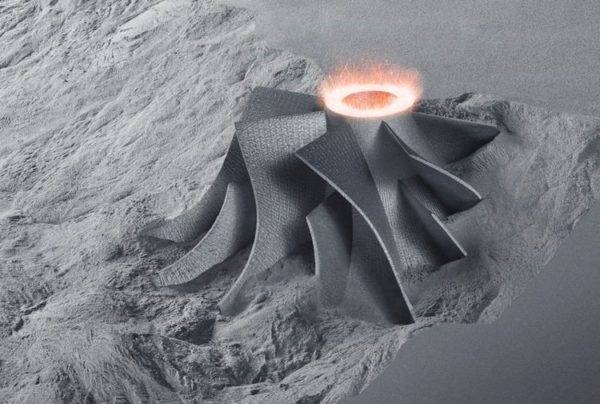
The SLS machine contains a bed filled with fine powder material, such as polyamides (nylon), elastomers, or metals. A recoating blade or roller spreads a thin layer of powder across the build platform. A high-powered laser, typically a CO2 laser, is directed at the powder bed using galvanometers (mirrors) that guide the laser beam according to the cross-sectional design of the current layer. The laser selectively fuses the powder particles together by raising the temperature just below the melting point, causing them to bond without turning into a liquid.
Once a layer is sintered, the build platform lowers by the thickness of one layer (typically 0.1 mm to 0.15 mm), and a new layer of powder is spread over the previous layer. This process repeats until the entire part is built.
After the printing process is complete, the build chamber and the parts within are allowed to cool gradually to avoid thermal stresses and warping. The completed part is then removed from the powder bed, and any unfused powder is brushed or blown off, which can often be recycled for future builds.
Post-processing steps include cleaning the part using brushes, compressed air, or ultrasonic cleaning, and depending on the application, additional finishing processes such as sanding, bead blasting, dyeing, or coating may be applied to improve surface finish and mechanical properties.
Selective Laser Sintering (SLS) utilizes a variety of materials for diverse applications. Nylon, or polyamide, is the most prevalent due to its robust mechanical properties and adaptability. Polystyrene finds utility in creating investment casting patterns. For components demanding flexibility, elastomers are the preferred choice. Metals such as titanium, aluminum, and stainless steel cater to high-strength requirements. Lastly, composites, like glass-filled nylon, offer enhanced characteristics for specialized purposes.
| Material Type | Description | Applications | Advantages | Disadvantages |
| Nylon (Polyamide) | Most common material used in SLS, known for good mechanical properties and versatility. | Prototyping, automotive parts, consumer goods. | High strength, durability, flexibility. | Surface finish may require post-processing. |
| Polystyrene | Often used for investment casting patterns. | Investment casting. | Easily removable for casting purposes. | Limited mechanical strength compared to other materials. |
| Elastomers | Flexible materials used for parts requiring elasticity. | Medical devices, consumer products. | Flexibility, impact resistance. | Limited heat resistance, may degrade over time. |
| Metals (e.g., Titanium, Aluminum, Stainless Steel) | High-strength materials for demanding applications. | Aerospace, automotive, medical implants. | High strength, thermal resistance, biocompatibility. | High cost, complex post-processing. |
| Composites (e.g., Glass-filled Nylon) | Enhanced properties for specific applications. | Industrial parts, functional prototypes. | Increased strength, stiffness, and thermal stability. | May require specialized handling and processing. |
Selective Laser Sintering (SLS) offers wide range of applications across various industries, some of them are listed below
The SLS process wide range of advantages in industrial setting, some of the advantages are as follows:
The limitations of SLS process are:
Selective Laser Sintering (SLS) is a versatile and powerful additive manufacturing technique that utilizes a range of materials to cater to various applications across industries. The diversity of materials, including nylons, polystyrene, elastomers, metals, and composites, provides unique advantages such as high strength, flexibility, and thermal resistance, making SLS suitable for prototyping, aerospace, automotive, medical, and consumer goods sectors. Each material type offers distinct benefits and challenges, from the durability and versatility of nylon to the specialized applications of metals and composites.
Understanding the properties and suitable applications of these materials is crucial for optimizing the SLS process and achieving the best results in manufacturing complex and functional parts. As technology advances, the development of new materials and improved processing techniques will continue to expand the capabilities and applications of SLS, reinforcing its role as a key technology in modern manufacturing.
Digital Catapult has launched an accelerator program to strengthen the industrial supply chain resilience of…
Lyten has officially launched two new products based on its advanced 3D Graphene platform, designed…
Bahrain's Arab Shipbuilding and Repair Yard (ASRY) has entered a strategic partnership with the global…
Aerospace giant Airbus has significantly expanded its use of additive manufacturing (AM), confirming it is…
The U.S. Navy’s Maritime Industrial Base (MIB) Program, General Dynamics Electric Boat, and Lincoln Electric…
Caracol, a global leader in robotic large-format additive manufacturing, and RusselSmith, an ISO-certified provider of…
This website uses cookies.