

Close Menu
AM ChronicleAM Chronicle
  • Content
    • News
    • Insights
    • Case Studies
    • AM Infocast
  • Focus Regions
    • India
    • Asia Pacific
    • Middle East
    • North America
    • Europe
  • Industries
    • Automotive
    • Aerospace
    • Defence
    • Energy
    • Construction
    • Healthcare
    • Tooling
    • Engineering
  • Training
  • Magazine
    • Digital Issues
  • Events
Facebook Instagram YouTube LinkedIn
  • About us
  • Media Kit
  • Contact us
Facebook Instagram YouTube LinkedIn
AM ChronicleAM Chronicle
  • Content
    1. News
    2. Insights
    3. Case Studies
    4. AM Infocast
    5. View All
    Lodestar3D Announces Exclusive Partnership with Prodways Group: Revolutionising Ceramic 3D Printing in India

    Lodestar3D Announces Exclusive Partnership with Prodways Group: Revolutionising Ceramic 3D Printing in India

    January 20, 2026
    Lodestar3D Boosts Indian Additive Manufacturing with Six TPM3D SLS System Installations

    Lodestar3D Installs Six TPM3D SLS System in Indian Companies

    December 27, 2025
    ARCI and Raghu Vamsi Machine Tools Sign MoU to Advance Additive Manufacturing and Surface Engineering

    ARCI and Raghu Vamsi Machine Tools Sign MoU to Advance Additive Manufacturing and Surface Engineering

    December 26, 2025
    Hang Yu, associate professor of materials science and engineering, with a miniaturized additive friction stir deposition machine used in his advanced manufacturing research. Photo by Peter Means for Virginia Tech.

    Scientists developed a 3D-printed smart composite that allows ceramics to flex under load

    December 25, 2025
    Gemini Generated Image eyzhd3eyzhd3eyzh

    Breaking the Thermal Barrier: 3D Printing Research on High-Performance Aluminum Alloys Innovates a New Class of Alloys

    December 17, 2025
    Making Milestones: 3D printing for a greener tomorrow

    Making Milestones: 3D printing for a greener tomorrow

    August 29, 2025
    Nestlé embraces technology and innovation in 3D printing

    Nestlé embraces technology and innovation in 3D printing

    August 29, 2025
    Pure copper and copper alloy (CuCrZr, CuCrNb, CuSn10) samples produced using ADDIREEN's green-laser powder bed fusion AM machines (Image courtesy: Addireen Technologies)

    Addireen: Pioneering Copper Printing in Metal Additive Manufacturing

    August 12, 2025
    Source: Formlabs

    Case Study: Eaton Corporation’s Strategic Transition to In-House 3D Printing for Tooling Applications

    August 29, 2025
    Revolutionizing Atherosclerosis Research with 3D-Bioprinted Brain Vessels

    Revolutionizing Atherosclerosis Research with 3D-Bioprinted Brain Vessels

    August 25, 2025
    Formlabs fuse 1+

    How Imaginarium Helped Kaash Studio Scale with the Right 3D Printing Technology

    April 12, 2025
    The Formlabs Fuse 1+ 30W

    Kaash Studio Optimized Service Bureau Operations with Formlabs 3D Printers- Case Study

    January 30, 2025
    Sustainable Production of Metal Powder for Additive Manufacturing

    Sustainable Production of Metal Powder for Additive Manufacturing with Bruce Bradshaw

    February 15, 2024
    Meeting Evolving Customer Demands in the Additive Manufacturing Industry with Tyler Reid

    Meeting Evolving Customer Demands in the Additive Manufacturing Industry with Tyler Reid

    February 9, 2024
    Innovation is at the heart of AMUG with Diana Kalisz

    Innovation is at the heart of AMUG with Diana Kalisz

    March 7, 2023
    3D Printing Workshops at AMUG with Edward Graham

    3D Printing Workshops at AMUG with Edward Graham

    March 7, 2023
    Lodestar3D Announces Exclusive Partnership with Prodways Group: Revolutionising Ceramic 3D Printing in India

    Lodestar3D Announces Exclusive Partnership with Prodways Group: Revolutionising Ceramic 3D Printing in India

    January 20, 2026
    Lodestar3D Boosts Indian Additive Manufacturing with Six TPM3D SLS System Installations

    Lodestar3D Installs Six TPM3D SLS System in Indian Companies

    December 27, 2025
    ARCI and Raghu Vamsi Machine Tools Sign MoU to Advance Additive Manufacturing and Surface Engineering

    ARCI and Raghu Vamsi Machine Tools Sign MoU to Advance Additive Manufacturing and Surface Engineering

    December 26, 2025
    Hang Yu, associate professor of materials science and engineering, with a miniaturized additive friction stir deposition machine used in his advanced manufacturing research. Photo by Peter Means for Virginia Tech.

    Scientists developed a 3D-printed smart composite that allows ceramics to flex under load

    December 25, 2025
  • Focus Regions
    • India
    • Asia Pacific
    • Middle East
    • North America
    • Europe
  • Industries
    • Automotive
    • Aerospace
    • Defence
    • Energy
    • Construction
    • Healthcare
    • Tooling
    • Engineering
  • Training
  • Magazine
    • Digital Issues
  • Events
Subscribe
AM ChronicleAM Chronicle
Home » India

Additive Manufacturing: Designing for Performance

India Insights By Priyanka NadigFebruary 5, 20225 Mins Read
Additive Manufacturing: Designing for Performance
LinkedIn Twitter Facebook WhatsApp Pinterest Email Copy Link

The growth of additive manufacturing (AM) has been remarkable in the last few decades. This is due to advances in market-driven technologies, increased personalization, new and improved   materials, customization, shorter product development cycles, and emergence of new business models. New AM techniques have been implemented in industries such as aerospace, biomedical, transportation, etc. with processes such as selective laser melting (SLM), fused deposition modelling (FDM), binder jetting, selective laser sintering (SLS), and other advanced processes. Also, thanks to increased precision in AM machines, a variety of materials can be manufactured with enhanced mechanical properties, with designs that are impossible to manufacture with conventional manufacturing techniques. AM thus aims to integrate the advantages of engineering design and prototypes into a final functional product.   

Vast opportunities have begun to open up with AM given its benefits of freedom of design, topology optimization, opportunity to experiment with different materials or combination of materials, colors, strength, and surface finish for finished products. Despite several advantages offered by AM, manufacturing constraints such as small holes, thin walls, overhang structures, and enclosed voids prevent removal of unmelted material or support structure.  Besides, anisotropy and thermal distortion, residual stress, and internal cracks in super alloys are inherent process limitations which could compromise the final product outcome.  Hence, it is paramount for design engineers to be exposed to both the capabilities and the process limitations while designing for AM, or Design for Additive Manufacturing (DfAM).

Freedom of design offers several opportunities to modify the original design or, in most cases, arrive at a new design  and address the challenges in conventional manufacturing.  DfAM approaches such as introduction of cellular or lattice structures, consolidation, part complexity, design for performance enhancement, light weight, etc. are often used to address these challenges. One of the approaches that has gained significant importance is cellular or lattice structures, due to its ability to selectively dispense material in specific regions of the part to improve strength and mechanical properties. Cellular structures take inspiration from nature such as structures of cork, corals, sponge, bone, honeycomb etc., which are often replicated to achieve desired strength. These designs, coupled with a suitable material, allow high strength-to-weight ratios, high heat transfer, energy absorption, and thermal insulation in the manufactured part which is beneficial for industries such as aerospace and health care where lower part weight   is a fundamental requirement.  
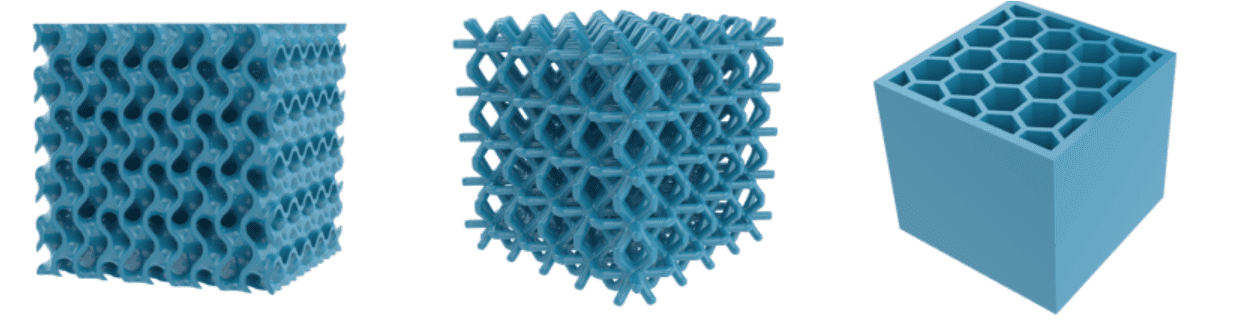
Types of lattice structures—surface based, strut based, planar based 
Types of lattice structures—surface based, strut based, planar based

Fig. 1  (L to R): Types of lattice structures—surface based, strut based, planar based (Image Source: gen3d.com)

Many engineering components come with multiple parts that are independently designed and assembled to create a functional part. However, designing parts individually and further assembling with appropriate fasteners and welding, followed by NDT tests to eliminate losses, damage etc., are extremely laborious, increase lead time, and pose challenges in maintaining the spares for each part in case of failure. Additive manufacturing allows the designers to consolidate all the parts that are feasible to manufacture with AM in the design stage itself. DfAM accounts for part thickness, orientation, critical regions of failure, desired surface finish, and creates a model that is not only convenient to manufacture but also simplifies processes in supply chain and quality management systems.

Fig. 2 refers to a rectangular waveguide, a conducting cylinder of rectangular cross section used to guide the propagation of waves. The conventionally manufactured waveguide  is manufactured in three segments followed by joining them either by welding or by fastening. If we choose to use fasteners, 103 parts are required for a foolproof assembly. However, there are chances of losses due to poor assembly or wear and tear. Additive manufacturing gives the freedom to consolidate 103 parts and bring the entire assembly count to one, thus eliminating the need for any test for losses or strength, besides improving the part life and efficiency. 
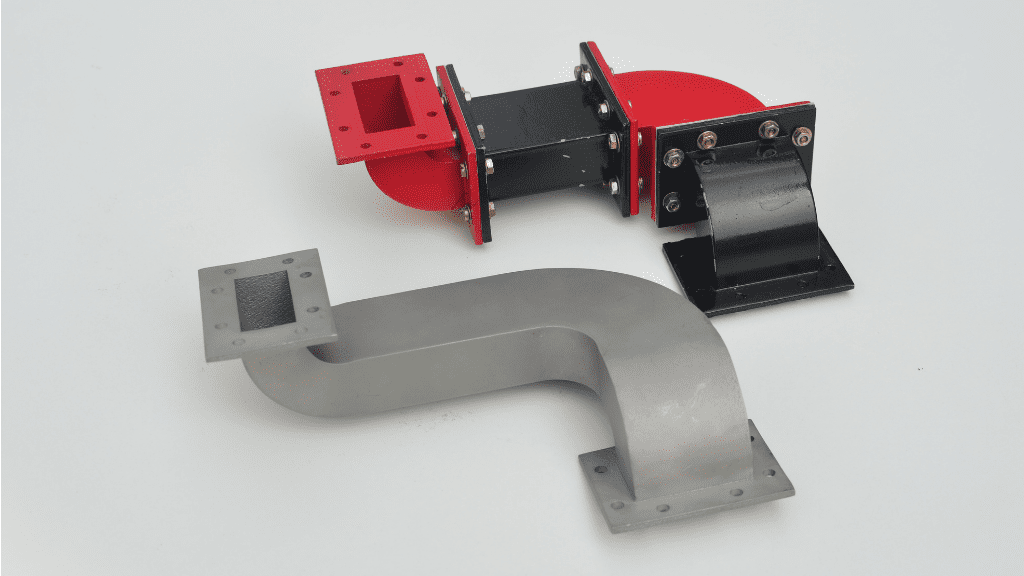
Rectangular wave guide—103 parts reduced to 1

Fig. 2: Rectangular wave guide—103 parts reduced to 1 (Image source: Unique Broadband Systems)

Heat sinks find application in diverse engineering domains such as transportation, aerospace, appliances etc., with a functional objective to effectively transfer heat—conductive material and design being determinants of its efficacy.  However, despite selecting an appropriate conducting material, due to design constraints, conventional manufacturing systems restrict the freedom to increase the surface area of heat transfer. Due to the design freedom offered by AM, additively manufactured heat sinks enjoy the benefit of both highly conducting materials and also increased surface area of heat transfer, thus improving the efficiency and performance (Fig. 3). 
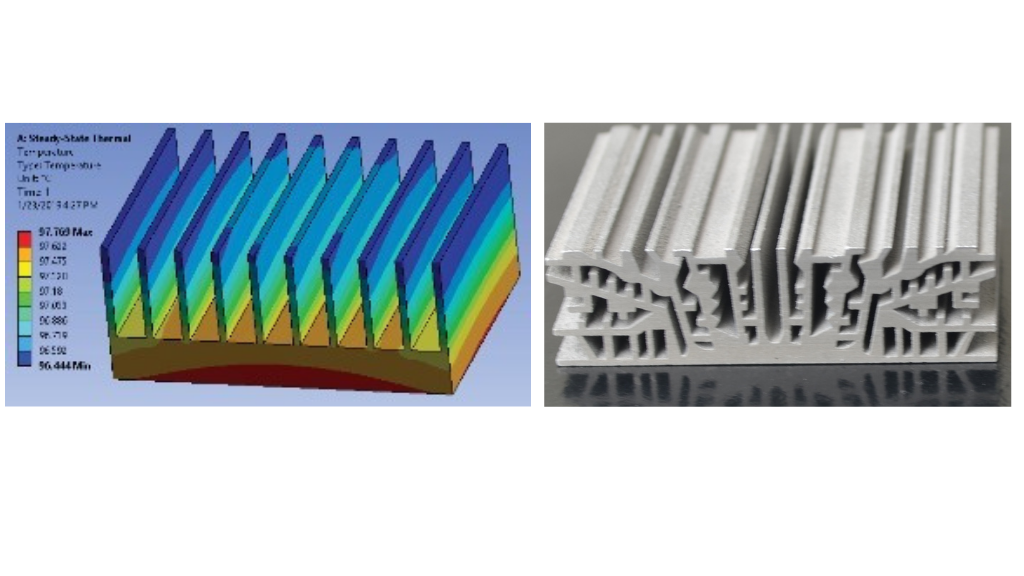
2 e1644038452830

Fig.3: Modified heat sink using principles of DfAM


Additive manufacturing is rapidly growing into a revolutionary technology that has the ability to transform design methodologies. Although it is not feasible to manufacture every part with AM, technically complex parts or high-mix, low-volume parts are often best candidates for AM. The DfAM approach integrates AM process parameters and materials and then designs parts to meet functional needs with a  focus on creating value-added parts and providing industrial solutions. DfAM’s impact is not just limited to the part, but extends to the entire product ecosystem. 

Subscribe to AM Chronicle Newsletter to stay connected:  https://bit.ly/3fBZ1mP 

Follow us on LinkedIn: https://bit.ly/3IjhrFq 

Visit for more interesting content on additive manufacturing: https://amchronicle.com/

 

3d printing additive manufacturing Cyient Design for additive manufacturing DFAM India Topology Optimization
Aditya Chandavarkar
  • Website

Aditya Chandavarkar is a established entrepreneur with business interests in manufacturing, innovative technology, training and consulting. Among other activities he the Co-Founder of Indian 3D Printing Network and is a subject matter expert on 3D Printing/Additive Manufacturing with good grasp of Additive Manufacturing trends in the Region including India, APAC, Middleeast and Africa.

NAMIC GLOBAL AM SUMMIT 2025
LATEST FROM AM
Lodestar3D Announces Exclusive Partnership with Prodways Group: Revolutionising Ceramic 3D Printing in India News

Lodestar3D Announces Exclusive Partnership with Prodways Group: Revolutionising Ceramic 3D Printing in India

January 20, 20262 Mins Read
Lodestar3D Boosts Indian Additive Manufacturing with Six TPM3D SLS System Installations News

Lodestar3D Installs Six TPM3D SLS System in Indian Companies

December 27, 20252 Mins Read
ARCI and Raghu Vamsi Machine Tools Sign MoU to Advance Additive Manufacturing and Surface Engineering News

ARCI and Raghu Vamsi Machine Tools Sign MoU to Advance Additive Manufacturing and Surface Engineering

December 26, 20252 Mins Read

CONNECT WITH US

  • 126 A, Dhuruwadi, A. V. Nagvekar Marg, Prabhadevi, Mumbai 400025
  • [email protected]
  • +91 022 24306319
Facebook Instagram YouTube LinkedIn

Newsletter

Subscribe to the AM Chronicle mailer to receive latest tech updates and insights from global industry experts.

SUBSCRIBE NOW

Quick Links

  • News
  • Insights
  • Case Studies
  • AM Training
  • AM Infocast
  • AM Magazine
  • Events

Media

  • Advertise with us
  • Sponsored Articles
  • Media Kit

Events

CNT Expositions & Services
© 2025 CNT Expositions & Services LLP.
  • Privacy Policy
  • Cookie Policy

Type above and press Enter to search. Press Esc to cancel.


0 / 75