

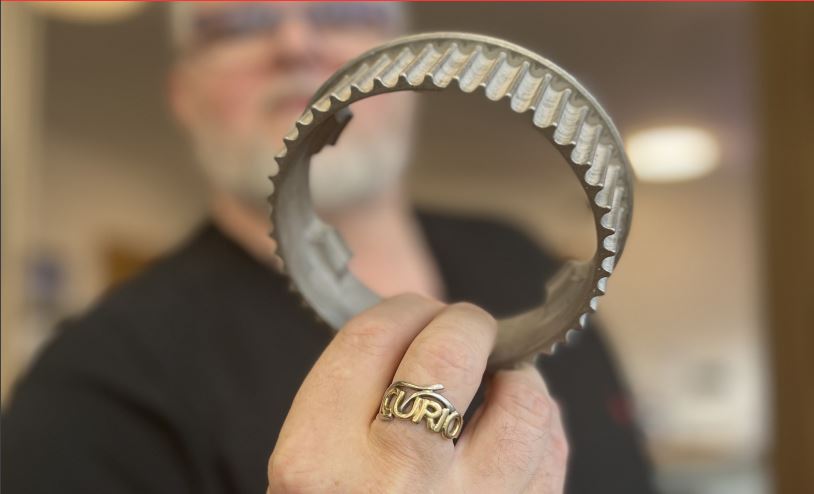
Fish processing systems transformed with stainless steel 3D printing from Desktop Metal
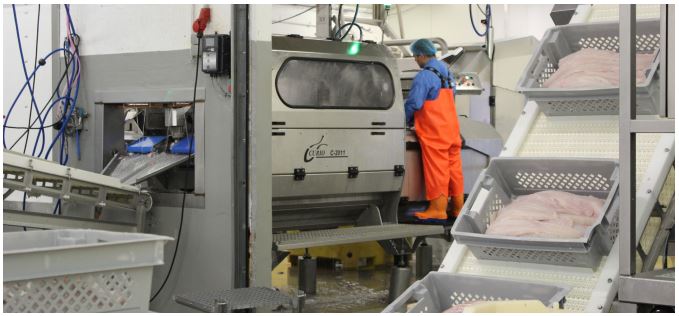
Elliði Hreinsson founded and built Curio into a top producer of processing machinery for the heading, filleting, and skinning of fish. The company, which uses a fleet of Desktop Metal and ETEC 3D printers to remain agile and innovative, was recently acquired by Marel (NASDAQ:MAREL), a global leader in the development and production of tools, complete solutions, software, and services for the food processing of chicken, meat, and fish.
A nod to the strong Icelandic roots of the company and its founder, Curio machines were developed to the needs of each fish processing scenario. “What sets these machines apart is the company’s closeness to the industry,” Hreinsson said. “We know the fish, we know the environments, we know how to design to get the best result for the fish.” After the acquisition by Marel, Hreinsson remains with the company as advisor working toward the continuous development of fish processing machines to improve durability, utilization, and speed, as well as serving as a supplier for parts through his manufacturing company, Gullmolar.
Hreinsson used innovation and resourcefulness to design and build any parts not available to bring the best food processing products to market. “Those motors were made in-house,” he points out on a tour of the Curio prototyping facility. With manufacturing capabilities including CNC lathes and mills, five axis machining, water cutting, robotic bending, and welding, Hreinsson is always looking for the most efficient process available to bring his designs into production.
He has been excited about the possibilities of additive manufacturing since his first exposure in the 1990s when a friend purchased a gypsum 3D printer for casting molds – he admits the designs were rudimentary, but the possibilities seemed endless. He incorporated addiitve manufacturing into prototyping operations in 2010 when he purchased his first FDM-style plastic 3D printers. “There was a new tool in my toolbox, new opportunities,” he said.
“[Laser powder bed fusion printers] were always terribly expensive and the part needed a lot of post-processing afterwards, so I didn’t actually see the benefits.”
Elliði Hreinsson, Founder of Curio and Gullmolar
However, to truly incorporate the benefits of additive manufacturing for the production of Curio machines, the company needed to be able to 3D print metal, specifically stainless steel parts. “I was always looking at laser powder bed fusion printers,” Hreinsson said. “I went to see some in action, but they were always terribly expensive and the part needed a lot of post-processing afterwards, so I didn’t actually see the benefits.”
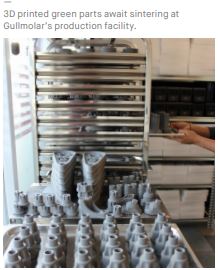
After discovering Bound Metal Deposition technology from Desktop Metal, Hreinsson was convinced he’d found the key to unlocking new potential from his products. Unlike laser-based systems that melt loose metal powder with strict facility requirements, the Studio System extrudes bound metal rods for easy-to-adopt 3D printing that enables office friendly metal additive manufacturing. He invested in two Studio System 3D printers to produce 316L stainless steel applications and a Desktop Metal Furnace to sinter the builds, producing dense metal parts.
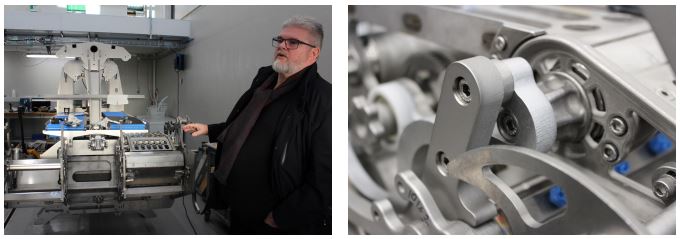
With experience in a range of traditional CNC processes, Hreinsson admitted to increasing the thicknesses of his initial prints beyond the design guidelines because metal 3D printing was unknown and hard to trust. “I was skeptical of the strength of the material at first. But with more experience I realized we were increasing wall thickness for no reason – just increased material and sintering time,” he said, laughing.
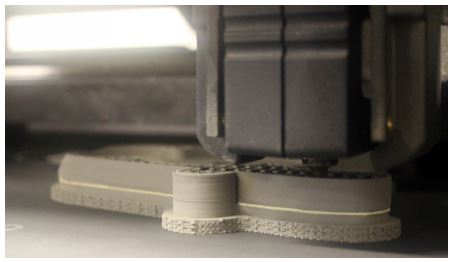
The two-step process of the Studio System and Desktop Metal Furnace, just print and sinter, yielded immediate benefits for the innovation of Curio machines.
After realizing the quick-turn capabilities to produce and iterate parts ondemand, two additional Studio Systems and a second furnace were added to Gullmolar’s production facility together. Hreinsson also added digital light processing (DLP) machines from ETEC, Desktop Metal’s brand of polymer 3D printers. With the ability to produce plastic prototype and metal parts for both testing and production, all six Desktop Metal systems (two ETEC Envision One machines and four Desktop Metal Studio Systems) run around the clock 3D printing parts while furnace runs are optimized to sinter 29 kg of metal in each batch.
3D Printing Drives Efficient Product Optimization
Fish processing machines are complex mechanical assemblies consisting of hundreds of small plates, gears, levers, and more. As in much of the food processing industry, these stainless-steel components are exposed to heat, water, and harsh cleaning chemicals with the expectation that they remain easy to sanitize, durable, and corrosion-free. 316L is an ideal food grade stainless steel alloy that can withstand heat with a high resistance to acids, alkalis, and chlorides, such as salt, as well as a pitting resistance allowing for a surface that’s easy to clean and maintain. Hreinsson knew offering highquality stainless steel material was a requirement for the adoption of 3D printed parts into production, and with 316L qualified on the Studio System, he was able to print innovative parts on-demand to improve performance.
Curio machines are designed to be cleaned after every shift to maintain essential levels of sanitization. To ease this process, Hreinsson points to parts like a 3D printed latch he developed that detaches to allow the entire machine to split in half, making cleaning and maintenance easier. The ease of customizing the design of each component allows for continuous iterations that improve the user experience of the product as it is tested and used in the production environment. If the skin of a specific species of fish gets stuck in the machine, he can easily print a bracket at a slightly different angle that optimizes the performance without the wait or cost of new tooling for a lost wax casting or CNC setup.
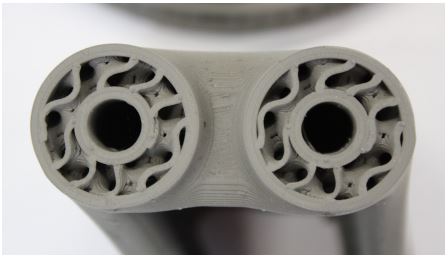
By incorporating 3D printed designs, Curio machines are also increasing the quality of the seafood products they process. “Features like internal cooling channels were not so easy to achieve with traditional methods, or were too expensive,” Hreinsson pointed out.
3D printing 316L stainless steel on the Desktop Metal Studio System, Hreinsson further optimizes the design of filleting machines to offset the heat transferred to the fish through the friction from the contact with the knives.
“By incorporating internal cooling channels [with 3D printing]… we have been increasing the yield and increasing the freshness.”
Elliði Hreinsson, Founder of Curio and Gullmolar
“We’ve measured one degree of heat exchange as fish are processed through the filleter,” he explained. “Heat increase means degradation and a shorter shelf life. By incorporating internal cooling channels within the components, we’re able to negate that and help keep the fish fresh. We have been increasing the yield and increasing the freshness,” Hreinsson said.
Offering the Market Custom Solutions, Faster
In-house 3D printing helped Curio reduce machine development cycles by an entire year. With ETEC DLP machines, Hreinsson is able to print durable plastic parts with fast turnarounds to get prototype parts. These first mockups are critical to test that all connections are accounted for and all clearances are correct, yet getting a mold or waiting for a milling setup for these first prototype parts was expensive.
“We can create ‘zero-type’ parts without waiting for tooling and we’re not married to the design,” Hreinsson stressed. He can quickly advance designs from his plastic to his metal 3D printers to get to first-model prototypes with metal parts within a few weeks. And with his metal 3D printing capacity, production parts are available as soon as a design is finalized.
First lot parts for assembly of a new machine previously required 54-58 weeks as files were sent to Asia for tooling design to make molds to cast the metal parts. Producing on an island nation, 3D printing provided Curio the ability to source solutions locally. The cost savings and logistical efficiencies allow Hreinsson to produce more throughput with skilled labor locally cheaper than the long process of outsourcing abroad.
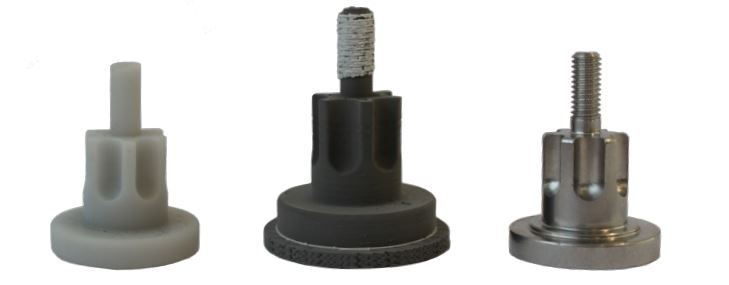
“Desktop Metal machines are speeding up development so much rather than waiting for CNC machining or mold making. We 3D print plastic parts to handle it, see the size and fit to get the correct form, and then we can directly print a stainless part. It’s really difficult to be patient when you’ve made a new machine and need to wait a year to sell it. Now we are able to make the first lot of the machine with 3D printed parts without any dead time, we can push machines into the market as soon as we are ready.”
The New Normal for Processing Machine Production
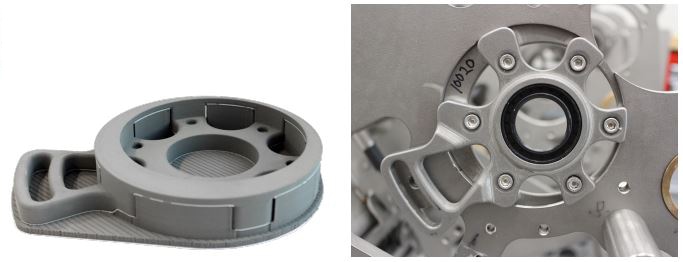
Existing Curio machines have had replacement wear parts as well as optimized designs 3D printed, but the newest filleting machine, the Curio C-2034, is the first model designed after Hreinsson invested in metal 3D printing with the Studio System. With over one hundred production 3D printed parts, from roller flanges and conveyor joints to mounting brackets, housings, and swivel arms, Hreinsson has difficulty remembering which components weren’t produced on the Studio System.
With the latest iterations of Curio machines delivered to the market faster than ever, Hreinsson is excited about future possibilities with his metal 3D printing capabilities. He admits the design freedom and ability to prototype new ideas rapidly is an inventor’s dream and he is looking forward to harnessing the power of 3D printing for continued performance improvement
of Curio processing equipment. “I’m excited for the next project to develop because we have the printer now. When you start to develop a new machine and you have this in your toolbox, it’s always in your head and the designs take off from there,” he concluded.
“Desktop Metal machines are speeding up development… we are able to make the first lot of the machine with 3D printed parts without any dead time, we can push machines into the market as soon as we are ready.”
Elliði Hreinsson, Founder of Curio and Gullmolar
Subscribe to AM Chronicle Newsletter to stay connected: https://bit.ly/3fBZ1mP
Follow us on LinkedIn: https://bit.ly/3IjhrFq
Visit for more interesting content on additive manufacturing: https://amchronicle.com