


Close Menu
AM ChronicleAM Chronicle
  • Content
    • News
    • Insights
    • Case Studies
    • AM Infocast
  • Focus Regions
    • India
    • Asia Pacific
    • Middle East
    • North America
    • Europe
  • Industries
    • Automotive
    • Aerospace
    • Defence
    • Energy
    • Construction
    • Healthcare
    • Tooling
    • Engineering
  • Training
  • Magazine
    • Digital Issues
  • Events
Facebook Instagram YouTube LinkedIn
  • About us
  • Media Kit
  • Contact us
Facebook Instagram YouTube LinkedIn
AM ChronicleAM Chronicle
  • Content
    1. News
    2. Insights
    3. Case Studies
    4. AM Infocast
    5. View All
    Caracol and RusselSmith Sign a Strategic Partnership to Drive Advanced Manufacturing in West Africa

    Caracol and RusselSmith Sign a Strategic Partnership to Drive Advanced Manufacturing in West Africa

    October 3, 2025
    NAMI and Lockheed Martin Collaborate for Additive Manufacturing Conversion Project

    NAMI and Lockheed Martin Collaborate for Additive Manufacturing Conversion Project 

    September 16, 2025
    LEGO Introduces First Mass-Produced 3D Printed Piece in New Holiday Train Set

    LEGO Introduces First Mass-Produced 3D Printed Piece in New Holiday Train Set

    September 15, 2025
    Boeing Revolutionizes Satellite Production with 3D-Printed Solar Arrays

    Boeing Revolutionizes Satellite Production with 3D-Printed Solar Arrays

    September 15, 2025
    Making Milestones: 3D printing for a greener tomorrow

    Making Milestones: 3D printing for a greener tomorrow

    August 29, 2025
    Nestlé embraces technology and innovation in 3D printing

    Nestlé embraces technology and innovation in 3D printing

    August 29, 2025
    Pure copper and copper alloy (CuCrZr, CuCrNb, CuSn10) samples produced using ADDIREEN's green-laser powder bed fusion AM machines (Image courtesy: Addireen Technologies)

    Addireen: Pioneering Copper Printing in Metal Additive Manufacturing

    August 12, 2025
    Digital Twin Integration in Additive Manufacturing Systems: Revolutionizing Design, Production, and Lifecycle Management

    Digital Twin Integration in Additive Manufacturing Systems: Revolutionizing Design, Production, and Lifecycle Management

    July 4, 2025
    Source: Formlabs

    Case Study: Eaton Corporation’s Strategic Transition to In-House 3D Printing for Tooling Applications

    August 29, 2025
    Revolutionizing Atherosclerosis Research with 3D-Bioprinted Brain Vessels

    Revolutionizing Atherosclerosis Research with 3D-Bioprinted Brain Vessels

    August 25, 2025
    Formlabs fuse 1+

    How Imaginarium Helped Kaash Studio Scale with the Right 3D Printing Technology

    April 12, 2025
    The Formlabs Fuse 1+ 30W

    Kaash Studio Optimized Service Bureau Operations with Formlabs 3D Printers- Case Study

    January 30, 2025
    Sustainable Production of Metal Powder for Additive Manufacturing

    Sustainable Production of Metal Powder for Additive Manufacturing with Bruce Bradshaw

    February 15, 2024
    Meeting Evolving Customer Demands in the Additive Manufacturing Industry with Tyler Reid

    Meeting Evolving Customer Demands in the Additive Manufacturing Industry with Tyler Reid

    February 9, 2024
    Innovation is at the heart of AMUG with Diana Kalisz

    Innovation is at the heart of AMUG with Diana Kalisz

    March 7, 2023
    3D Printing Workshops at AMUG with Edward Graham

    3D Printing Workshops at AMUG with Edward Graham

    March 7, 2023
    Ms. Larissa Smith, Director, Advanced Manufacturing, DRPM, Maritime Industrial Base Program, U.S. Navy, and Mr. Ken Jeanos, VP, Materials and Supply Chain, General Dynamics Electric Boat, are joined by Lincoln Electric leadership and its Additive Solutions team to commemorate the ribbon cutting that marks the investment of four SculptPrint™ 1500 additive manufacturing cells to support the production of critical submarine components.

    U.S. Navy’s Maritime Industrial Base Program, General Dynamics Electric Boat, and Lincoln Electric Advance Additive Manufacturing to Strengthen Submarine Production

    October 3, 2025
    Caracol and RusselSmith Sign a Strategic Partnership to Drive Advanced Manufacturing in West Africa

    Caracol and RusselSmith Sign a Strategic Partnership to Drive Advanced Manufacturing in West Africa

    October 3, 2025

    Book References

    September 20, 2025
    NAMI and Lockheed Martin Collaborate for Additive Manufacturing Conversion Project

    NAMI and Lockheed Martin Collaborate for Additive Manufacturing Conversion Project 

    September 16, 2025
  • Focus Regions
    • India
    • Asia Pacific
    • Middle East
    • North America
    • Europe
  • Industries
    • Automotive
    • Aerospace
    • Defence
    • Energy
    • Construction
    • Healthcare
    • Tooling
    • Engineering
  • Training
  • Magazine
    • Digital Issues
  • Events
Subscribe
AM ChronicleAM Chronicle
Home » Case Studies

BRAGi 3D Prints Industrial Custom-Made Glasses Frames

Case Studies By Abhishek GokarnJanuary 14, 20216 Mins Read
fa4159de7ee4c5be75152ae129a52d4
LinkedIn Twitter Facebook WhatsApp Pinterest Email Copy Link

Anybody who wears glasses knows what it’s like: despite adjustment, the frame pinches and twitches from time to time; sometimes, it simply doesn’t fit properly or ensure optimum visual support. One or more visits to the optician are the best-case scenario, having to buy new glasses is the most expensive. So why not take advantage of additive manufacturing for customized eyewear? The Chinese company Nanjing BRAGi Optical Technology Co, Ltd. is doing exactly this as their business model – while relying on the experience and expertise of EOS, the technology provider for 3D printing, for this and future growth.

Challenge

“One size fits all” – a nice idea, but often not feasible. This applies especially to acetate frames manufactured using the traditional injection molding or 2D cutting process – individual face shapes with their decisive nuances are simply too different. In some cases, the lenses may even be at the wrong distance from the eye, or the wrong height in relation to the pupils. It’s easy to illustrate for non-glasses wearers: imagine a car where neither seat nor pedals nor mirrors can be adjusted properly.

The solution is obvious. If a pair of glasses cannot be adjusted, they must fit perfectly from the very beginning. This can be made possible through individual, precise production. “We are already familiar with the concept of customized production from numerous other applications, for example in the medical sector. After all, prostheses or implants are also tailored to individual patients,” explains Gong Xinyi, designer at BRAGi. “So why wouldn’t the same concept work in the field of optics?”

Selective Laser Sintering (SLS) is a proven technology that has been successful and established for many years. A laser prints a part layer by layer – ideal for a high degree of customization without additional costs. All that is required is an industrial 3D printer and material plus the corresponding 3D computer data. Any component can be easily and quickly produced from the data. This also applies to eyewear, which are delicate but still need to be robust and fit precisely.

Solution

The solution found by BRAGi takes all this into consideration: data about the shape of the head are captured using a 3D scanner. All the glasses wearer needs to do is visit a partner optician. In just a few minutes, the optician takes several photos of the person’s head with a camera mounted on a tablet. This way, the look of the new glasses can also be checked immediately with a virtual representation. The look of other designs can be quickly checked as well with the subject’s own face.

This is the beauty of BRAGi’s business model: the frame is individually manufactured for its wearer – one of 70 models from seven series is always chosen as the basis. The range extends from adult’s to children’s glasses and even prescription sunglasses. The frame is always manufactured in white nylon and given a finish during post-processing, with one of 14 different colors. A pure white and easily post-treatable surface is particularly important for high quality coloring. For manufacturing, BRAGi uses FORMIGA P 110 Velocis systems and EOS’s proven PA 2200 material. “We intensively compared the technologies of different suppliers from all over the world,” explains designer Xinyi. “The EOS system is superior to other manufacturers in terms of component quality and surface finish. The fit between frame and bracket is excellent for every build cycle, and the technology-related staircase effect is virtually non-existent. In addition, the material allows any form of finish, including coloring. The purity of the white of the glasses frames is also very important, and here again the EOS system is at the top.”
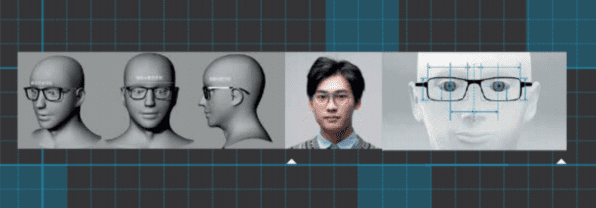
Before the glasses are made, there is a data capture process.
Before the glasses are made, there is a data capture process. (Source: BRAGi)

Results

BRAGi rapidly established a business model that enables the quick and easy production of individual glasses frames by means of additive manufacturing as a complete scan-to-print solution. This is particularly useful for glasses wearers who have problems with standard frame shapes due to the shape of their noses. But all other users of BRAGi eyewear will also enjoy the very comfortable fit, which at the same time guarantees optimum optical support and low weight. In addition, the glasses are robust and have a long service life. Another very important feature for wearers: they are hypoallergenic.

The business model is streamlined and enables a high degree of individuality: in the injection molding or 2D cutting process, the minimum order quantity for a frame is about 500 pieces – in contrast to custom-made and at the same time low-cost additively and individually manufactured glasses. Nevertheless, the process and part quality are consistently high the combination with the material properties of PA 2200 means glasses frames that can withstand the high demands of post-processing, right down to coloring and appearance. As this is a fashion-oriented industry, new designs can be developed and implemented quickly, as Gong Xinyi emphasizes: “Stop doing prototyping. Start production. 3D printing is revolutionary for the optical industry.”

In just a few months, BRAGi has already produced over 30,000 glasses and shipped them to customers with a short delivery time. For BRAGi, this means prosperous business development: the company, which is based in China, has expanded its business activities to Korea, Japan, Indonesia, Singapore, Thailand and Malaysia, and there are also already inquiries from Europe. A scan at home is also planned in order to make it even more convenient for customers. Simplifying the supply chain in this way would further improve margins. As a result, additive manufacturing would contribute to another positive effect on the business model. The ability to implement their model without additional points of sales or warehouses is also a plus point for BRAGi in this scenario. More and more glasses wearers are benefiting from the advantages of a custom-made frame. One size fits all? No way!
glasses
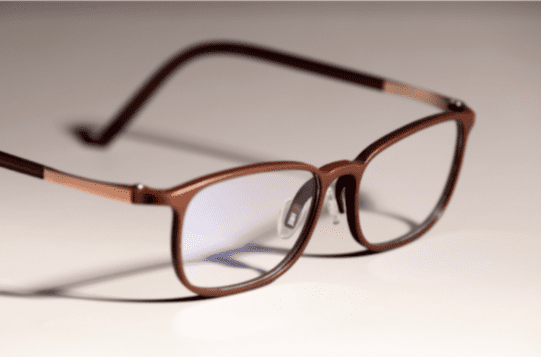
Whether bridge or temple: the better the fit, the more comfortable and functional the glasses and with 3D printing, they are also light and robust.

Download the case study, here!

8d8dd492aa8b7d68765eb150ce7b3684?s=120&d=mp&r=g
Abhishek Gokarn

Head - Marketing at Indian 3D Printing Network. Communications is an integral part of an organisation. It is the image an organisation portrays to the intended target audience. Understanding the immense responsibility this puts on me and deliver accordingly has always been and will continue to be my objective.

3d printing 3D printing technology 3D scanning BRAGi Healthcare industrial 3D-printer selective laser sintering
Abhishek Gokarn

Head - Marketing at Indian 3D Printing Network. Communications is an integral part of an organisation. It is the image an organisation portrays to the intended target audience. Understanding the immense responsibility this puts on me and deliver accordingly has always been and will continue to be my objective.

NAMIC GLOBAL AM SUMMIT 2025
LATEST FROM AM
Ms. Larissa Smith, Director, Advanced Manufacturing, DRPM, Maritime Industrial Base Program, U.S. Navy, and Mr. Ken Jeanos, VP, Materials and Supply Chain, General Dynamics Electric Boat, are joined by Lincoln Electric leadership and its Additive Solutions team to commemorate the ribbon cutting that marks the investment of four SculptPrint™ 1500 additive manufacturing cells to support the production of critical submarine components. Uncategorized

U.S. Navy’s Maritime Industrial Base Program, General Dynamics Electric Boat, and Lincoln Electric Advance Additive Manufacturing to Strengthen Submarine Production

October 3, 20252 Mins Read
Caracol and RusselSmith Sign a Strategic Partnership to Drive Advanced Manufacturing in West Africa News

Caracol and RusselSmith Sign a Strategic Partnership to Drive Advanced Manufacturing in West Africa

October 3, 20252 Mins Read

Book References

September 20, 20257 Mins Read

CONNECT WITH US

  • 126 A, Dhuruwadi, A. V. Nagvekar Marg, Prabhadevi, Mumbai 400025
  • [email protected]
  • +91 022 24306319
Facebook Instagram YouTube LinkedIn

Newsletter

Subscribe to the AM Chronicle mailer to receive latest tech updates and insights from global industry experts.

SUBSCRIBE NOW

Quick Links

  • News
  • Insights
  • Case Studies
  • AM Training
  • AM Infocast
  • AM Magazine
  • Events

Media

  • Advertise with us
  • Sponsored Articles
  • Media Kit

Events

CNT Expositions & Services
© 2025 CNT Expositions & Services LLP.
  • Privacy Policy
  • Cookie Policy

Type above and press Enter to search. Press Esc to cancel.


0 / 75